
best car trunk light motion sensor activated options solve a very specific annoyance: you open the trunk with your hands full, and the factory light is dim, blocked, or nonexistent, so you end up using your phone flashlight like it’s 2010.
A good motion-activated trunk light should turn on quickly, shine where you actually load groceries or gear, and not drain your car battery or eat through AAAs every week. The tricky part is that the “best” pick changes depending on your trunk layout, how you mount it, and whether you want rechargeable power.
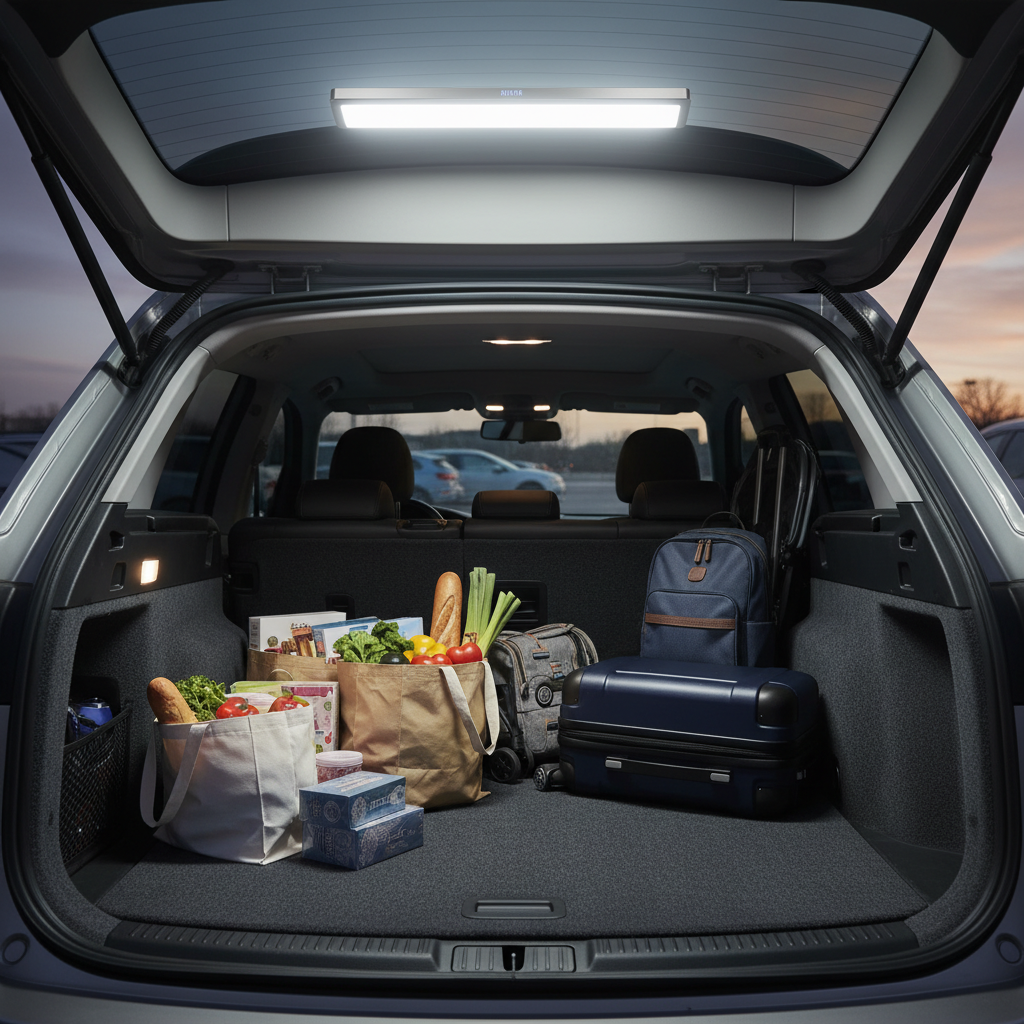
Also, a lot of listings look similar, then you discover the sensor is too sensitive, the adhesive fails in heat, or the beam pattern creates bright glare but still leaves corners dark. This guide breaks down what matters, how to self-check your situation, and what to buy based on real trunk-use scenarios.
What “motion sensor activated” really means in a trunk
Most trunk lights marketed as motion-activated actually use one of three triggers, and they behave differently in daily use.
- PIR motion sensor (passive infrared): detects body heat movement, works well for people moving near the trunk, can miss you if you’re very still.
- Door/tilt sensing: turns on when the trunk opens or the light tilts, reliable, but not truly “motion” and may stay on longer than needed.
- Light sensor + motion combo: avoids turning on in bright daylight, usually more battery-friendly, sometimes too picky if you load in a well-lit garage.
For most drivers, PIR or combo sensing is the sweet spot, because you get hands-free activation without needing to wire into the car.
Why factory trunk lights often feel useless
This usually isn’t your imagination, it’s design compromise. Automakers prioritize cost, uniformity, and minimal current draw, so trunk lighting tends to be a small bulb tucked into a corner.
- Shadowing: the light sits behind cargo, stroller frames, or a cooler, so the “lit trunk” becomes a dim tunnel.
- Low lumen output: enough to satisfy basic visibility, not enough for finding small items or working on a spare.
- Color temperature: some factory bulbs are warm and low-contrast, making black bags and dark trim blend together.
- No light in key zones: SUVs and hatchbacks often have deep cargo wells where the beam never reaches.
Upgrading to a motion-sensing LED is less about “more light” and more about putting light where you actually use your hands.
Quick self-check: which trunk light setup fits you?
Before you pick a product, get clear on your constraints. Two minutes of checking saves you returns and re-mounting headaches.
1) Your trunk type
- Sedan trunk: usually needs a wider beam, mounting on the lid or upper side wall works best.
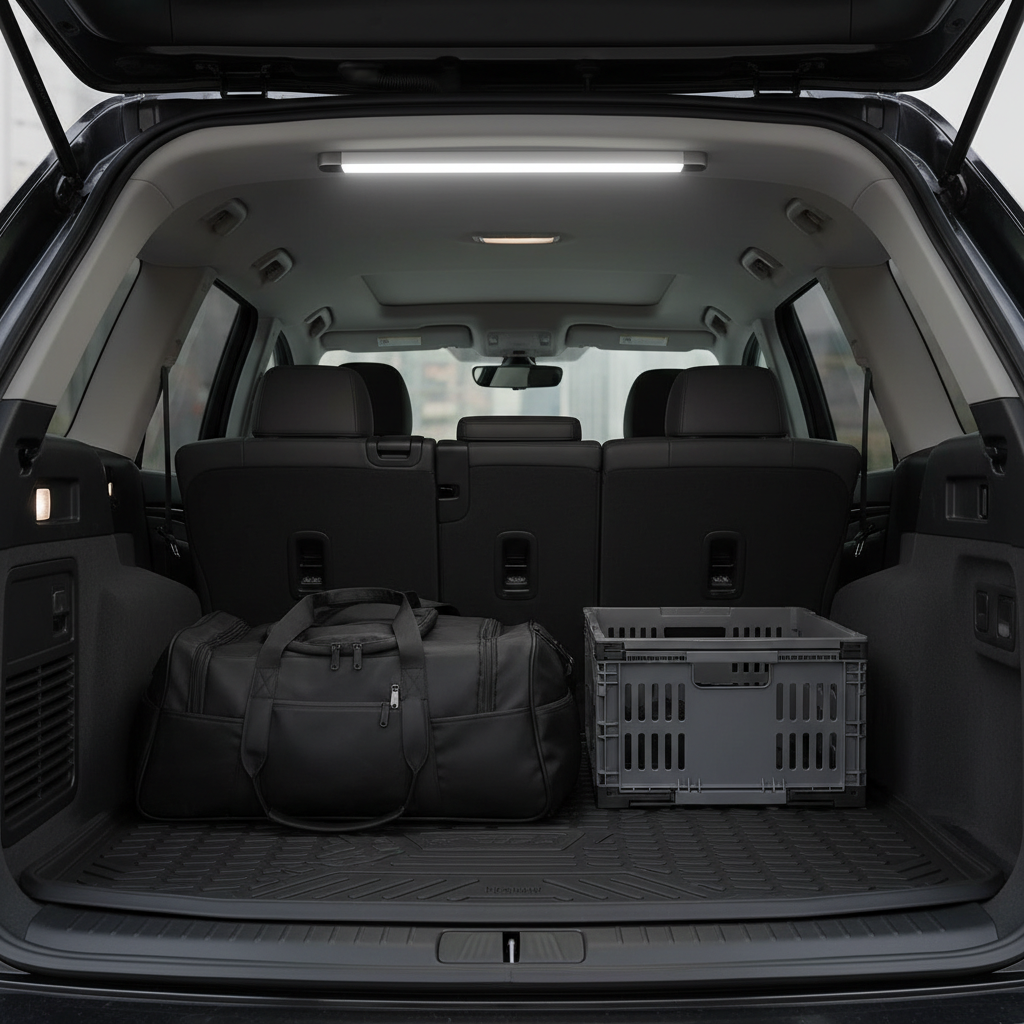
- SUV/hatch: benefit from two lights or one longer bar, mounted high to reduce shadows.
2) Where you can mount it
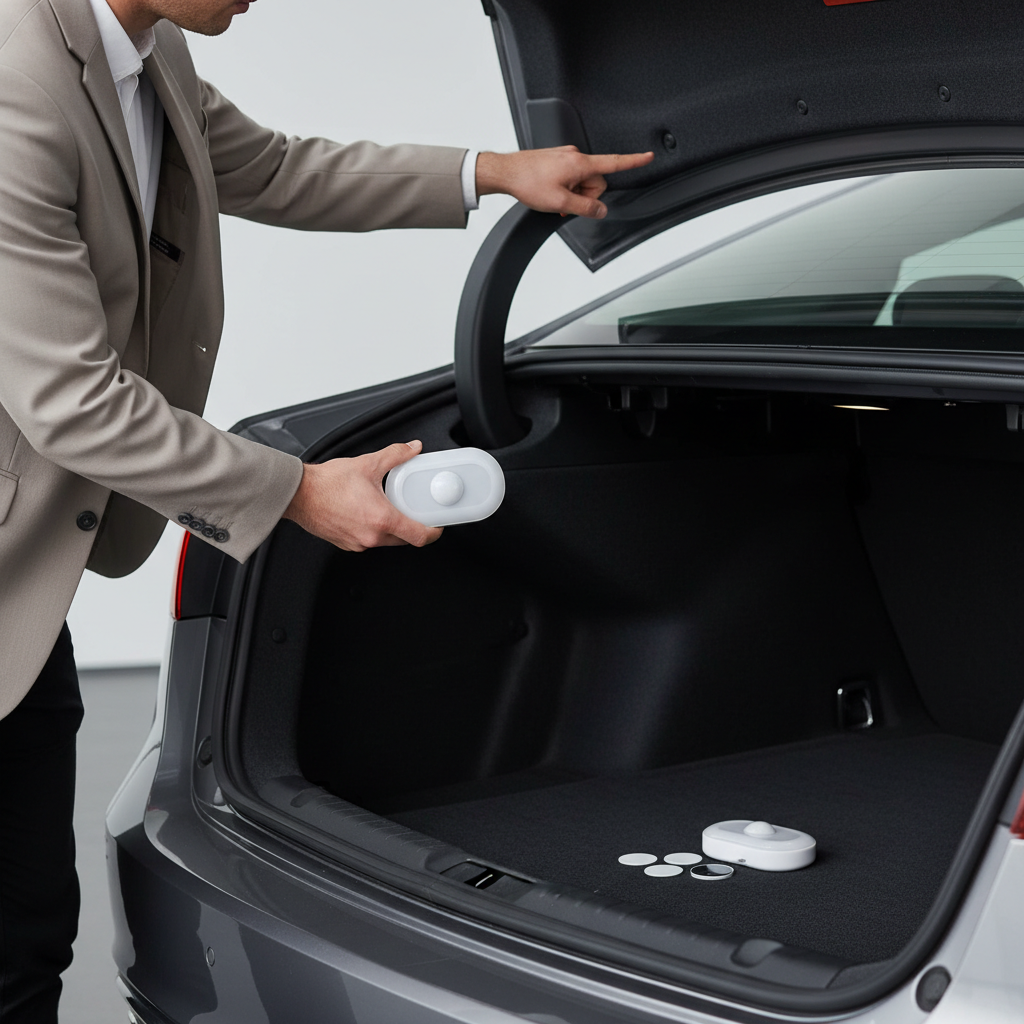
- Metal surface available → magnetic base is easy and removable.
- Carpet/liner only → adhesive plate, Velcro, or screws may be needed (check what you’re willing to do).
3) Power preference
- USB rechargeable: convenient, but you must remember to charge.
- AAA/AA batteries: easy to swap, cost adds up, performance varies in cold weather.
4) Your real use pattern
- Frequent grocery loading at night: prioritize fast sensor response and a broad flood beam.
- Occasional roadside use: prioritize brightness, sturdy mount, and longer runtime.
Key specs that actually matter (and the ones that don’t)
Listings love to shout “super bright” and “smart sensor.” In practice, a few specs decide whether you keep it installed after a week.
- Brightness and beam: for trunks, a flood beam often feels better than a narrow spotlight, even at similar lumen numbers.
- Sensor angle and range: too narrow and it misses you, too wide and it triggers when you walk past the car in the garage.
- Auto-off timing: 15–30 seconds can save batteries, but can also annoy you if you’re standing still while organizing.
- Mounting reliability: heat-resistant adhesive and a stable magnet matter more than fancy modes.
- Charging port type: USB-C is convenient, micro-USB still works, but older ports can be fussier over time.
What usually matters less than people think: an ultra-high lumen claim without a real beam pattern description, or 5+ lighting modes you’ll never cycle through in a trunk.
Comparing common product types (with a practical table)
Instead of chasing one “universal best,” it’s more useful to match product type to your car and habits.
| Type | Best for | Pros | Trade-offs |
|---|---|---|---|
| Rechargeable LED bar (motion + light sensor) | Daily loading, SUVs/hatches | Wide coverage, fewer battery swaps, often better auto-off | Needs charging routine, port wear if abused |
| Compact puck light (PIR motion) | Small sedan trunks, glovebox or side pocket use | Easy to place anywhere, cheap to try | More shadowing, smaller batteries, can feel “spotty” |
| Magnetic work-light style (motion optional) | Roadside tasks, occasional heavy use | Strong magnet, durable housing, can double as emergency light | Bulkier, may rattle if poorly placed |
| Hardwired trunk LED upgrade | People who want OEM-like behavior | No charging, consistent activation with trunk open | Install complexity, wiring risks if done wrong |
Installation that doesn’t fall off in July heat
The most common “bad product” review is really a bad mount. Hot interiors, textured liners, and trunk dust defeat weak adhesives.
Surface prep (don’t skip this)
- Clean the mounting area with isopropyl alcohol, then let it dry fully.
- Avoid sticking directly to fuzzy carpet if you can, use a flat plastic trim zone or an included mounting plate.
- Press firmly for 30–60 seconds and avoid loading the area for a few hours when possible.
Placement tips that reduce shadows
- Sedans: mount on the trunk lid liner, closer to the centerline, angled down toward the latch area.
- SUVs/hatches: mount high on a side panel or upper trim, pointing across the cargo floor.
- If the light has a strong PIR sensor, avoid aiming it directly at the garage walkway, or it may trigger constantly.
Buying checklist: how to choose the best car trunk light motion sensor activated
When you’re scanning listings, use a short filter so you don’t get distracted by fluff.
- Beam: look for “wide angle,” “flood,” or photos showing broad spill, not just a bright dot.
- Runtime: check whether it states hours per charge or per battery set, and whether auto-off timing is mentioned.
- Mount options: magnet plus adhesive plate is usually the most forgiving combo.
- Charging: USB-C preferred if you already use USB-C in the car, but not a deal-breaker.
- Modes: motion-only + always-on is often enough, too many modes can be accidental-switch city.
Key point: the best car trunk light motion sensor activated choice is the one you will actually keep powered and mounted. A slightly less “premium” light that’s easy to charge and stays put often wins long-term.
According to NHTSA, keeping your vehicle maintained and ensuring visibility around your vehicle can support safer operation; for any wiring changes or electrical issues, it’s usually smarter to consult a qualified mechanic rather than improvising.
Common mistakes that waste time (and how to avoid them)
- Mounting too low: it lights your ankles and the bumper, not the cargo floor, so you still can’t find items.
- Choosing ultra-sensitive motion: constant triggers in a garage drain batteries fast, combo sensor models help here.
- Ignoring cold/heat: alkaline batteries can underperform in cold climates, adhesives can fail in extreme heat.
- Blocking the sensor: if the lens faces into a corner or behind a cargo net, the “smart” light looks dumb.
Conclusion: a realistic “best” pick depends on your trunk
If you want a simple upgrade that feels modern, a rechargeable LED bar with motion activation and a wide beam is usually the safest bet for most vehicles, while compact puck lights make sense for smaller trunks or as a secondary light for corners. If you’re tempted by a hardwired solution, it can be cleaner, but installation quality matters more than the light itself.
Do two things now: measure where you can mount (lid, side trim, metal) and decide whether you’ll actually charge a device monthly. That alone narrows you to the right category fast.
FAQ
What lumen level is “enough” for a trunk light?
There isn’t one magic number, because beam shape matters as much as brightness. Many people prefer a wide, even flood that avoids harsh hotspots, especially in sedans where shadows are common.
Will a motion sensor trunk light drain my car battery?
Most add-on motion lights are battery-powered or rechargeable, so they typically won’t pull from the vehicle system. If you choose a hardwired kit, electrical work should be done carefully, and a mechanic can help if you’re unsure.
Why does my motion-activated trunk light turn on when the trunk is closed?
This often happens when the sensor faces a gap, sees movement through a window, or the light has no ambient-light detection. Repositioning it or choosing a model with a light sensor usually reduces false triggers.
Is adhesive mounting reliable on trunk carpet?
On fuzzy liners, adhesive can fail over time, especially with heat and dust. A mounting plate, Velcro-style fastener, or a magnetic base on exposed metal tends to hold more consistently.
Where should I place a motion sensor light in a sedan trunk?
Mounting higher, often on the trunk lid liner near the center, usually gives better coverage than mounting low on side walls. The goal is to light the floor area where your hands work.
Do I need one light or two for an SUV cargo area?
Many SUVs do fine with one wide bar placed high, but if you carry tall items that block light, a second smaller light on the opposite side can reduce shadows.
What’s better: motion-only or motion plus light sensor?
Motion plus light sensor is often easier to live with in garages or daytime errands because it avoids turning on unnecessarily. Motion-only can still work if placement prevents constant triggering.
If you’re trying to pick the best car trunk light motion sensor activated option without overthinking it, focus on beam width, mount reliability, and a power setup you won’t resent, then fine-tune placement before you blame the product.