
how to jump start a car with dead battery safely comes down to three things: correct cable order, good connection points, and staying away from sparks near the battery.
If you’ve ever turned the key and heard only a click, you already know the pressure, you might be late, it might be dark, and the last thing you want is to damage your car’s electronics or create a safety risk.
This guide walks you through a practical, real-world jump start, plus what to do when it still won’t start, and when you should stop and call for help.
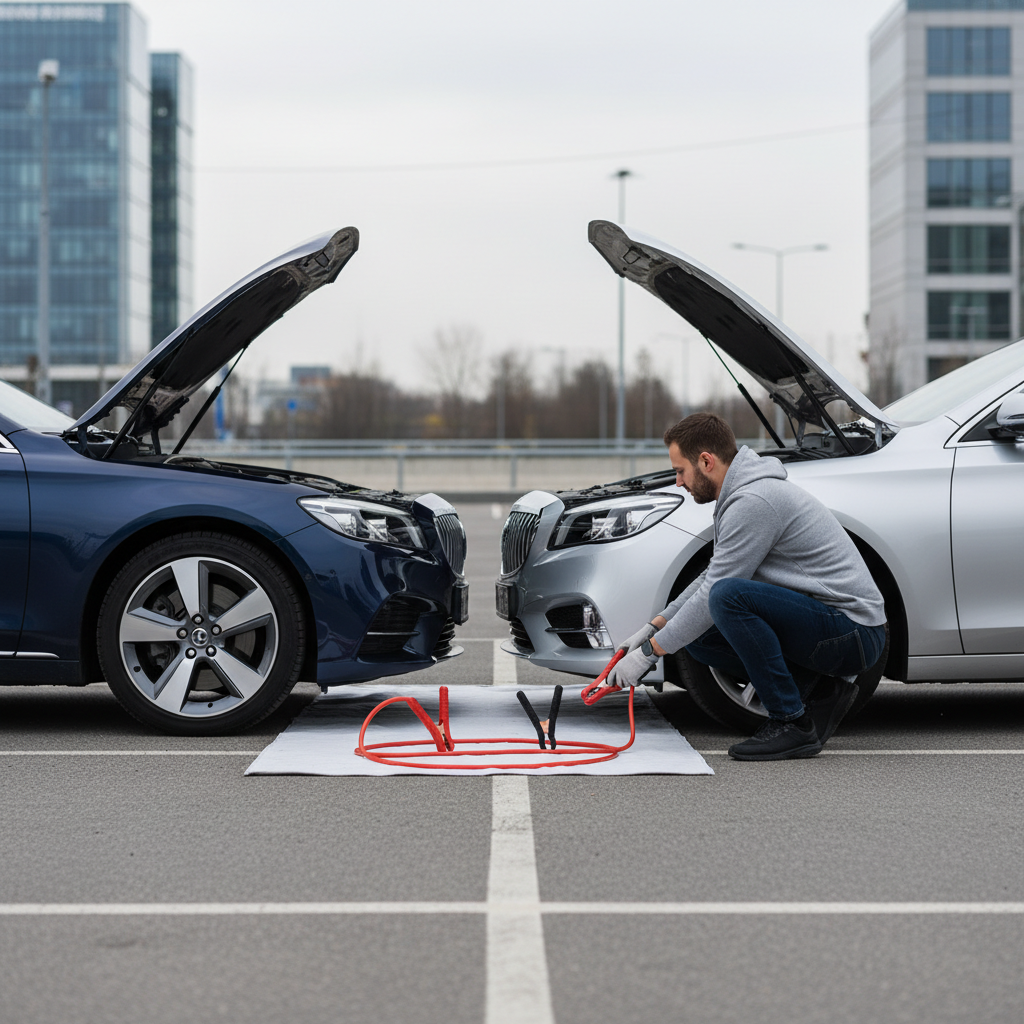
What “dead battery” usually means (and what it doesn’t)
A “dead” battery can mean different things, and that changes what you should try. Most of the time it’s simply low voltage, not a permanently failed battery.
- Likely low battery: slow crank, dim lights, clicking sound, car starts with a jump and then runs normally.
- Possible battery failure: battery is old, swollen case, strong sulfur smell, or it won’t hold a charge after driving.
- Could be something else: no dash lights at all (loose terminals), security/immobilizer issue, starter problem, or a blown main fuse.
According to NHTSA, batteries can produce flammable hydrogen gas during charging and jump starting, which is why spark control and correct connection order matter.
Before you connect cables: a quick safety and gear checklist
Don’t skip this part, it’s where most avoidable mistakes happen, especially when people rush.
What you’ll need
- A working donor vehicle or a portable jump starter (battery pack)
- Jumper cables in good shape (no cracked insulation, clean clamps)
- Optional but smart: gloves, eye protection, flashlight
Safety checks that take 30 seconds
- Make sure both vehicles are in Park (or neutral for manual) with parking brakes set.
- Turn off ignitions, lights, HVAC, radios, and unplug chargers.
- Inspect the battery area: if you see cracks, leaking fluid, swelling, or smoke, do not jump start.
- Confirm you’re using the right battery voltage (most passenger cars are 12V).
If your battery is in the trunk or under a seat, many cars have designated jump terminals under the hood, your owner’s manual usually shows the exact points.
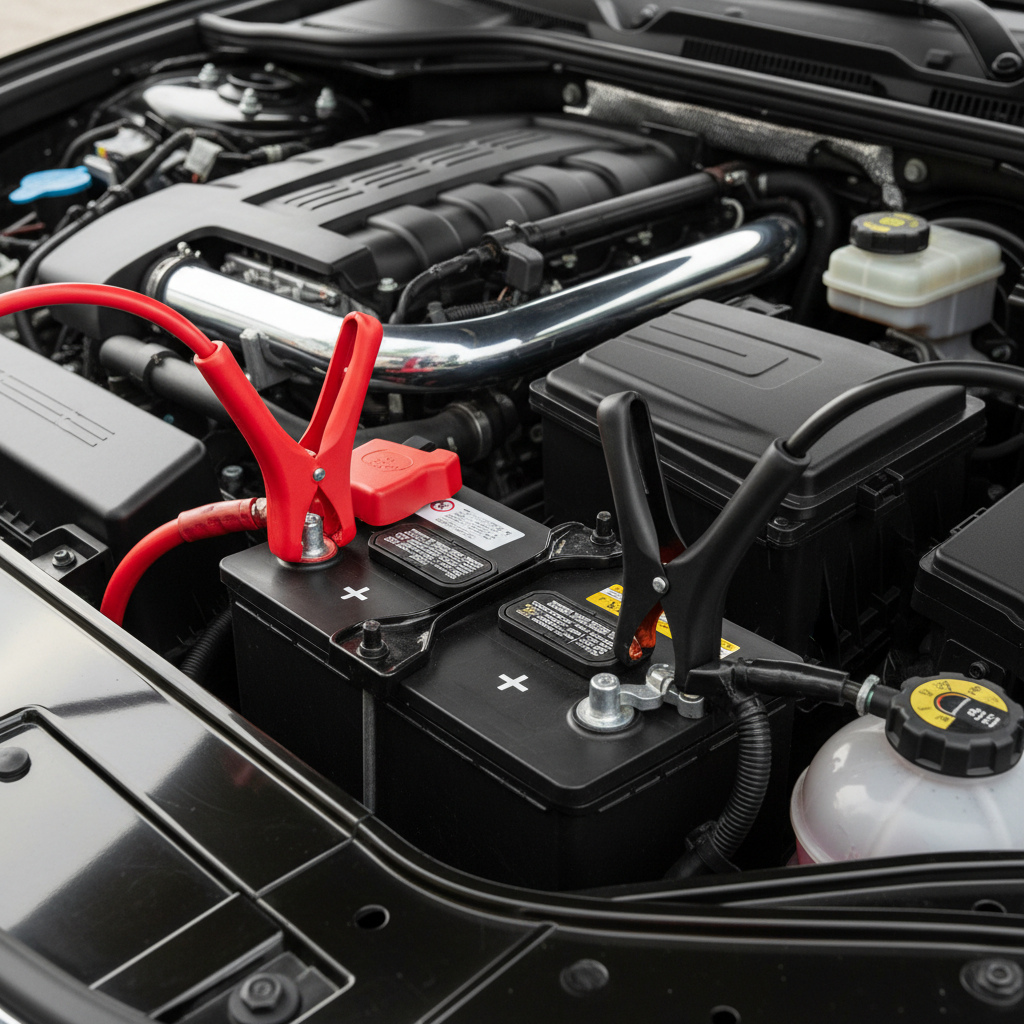
Step-by-step: how to jump start with jumper cables (correct order)
This is the standard cable method. The goal is simple: connect positive-to-positive, then connect the final negative clamp to a safe ground point away from the battery.
Connection order (memorize this)
- Connect red clamp to the dead battery’s positive (+) terminal.
- Connect the other red clamp to the donor battery’s positive (+) terminal.
- Connect black clamp to the donor battery’s negative (–) terminal.
- Connect the other black clamp to an unpainted metal ground on the dead car (engine block or solid bracket), away from the battery.
Why that last step matters: it reduces the chance of sparking right above the battery where hydrogen gas may be present.
Starting sequence
- Start the donor vehicle and let it idle for 2–5 minutes.
- Try starting the dead vehicle. If it cranks slowly, wait another couple minutes and try again.
- Once it starts, keep both cars running for a short moment, then proceed to removal.
Removal order (reverse, but with intention)
- Remove the black clamp from the grounded metal on the revived car.
- Remove the black clamp from the donor battery.
- Remove the red clamp from the donor battery.
- Remove the red clamp from the revived battery.
Keep clamps from touching each other or any spinning parts (fans, belts). If the engine bay is tight, take an extra breath and move slowly, rushing is how clamps slip.
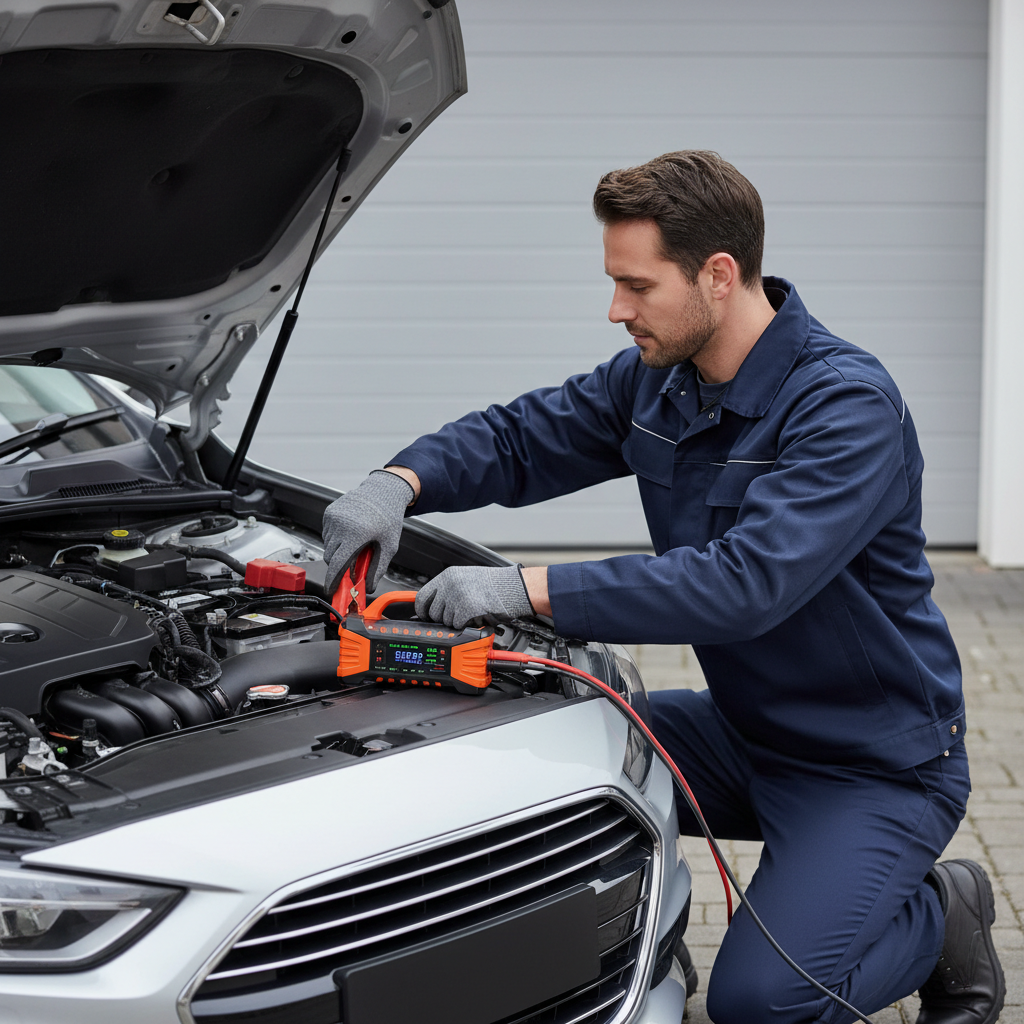
If you’re using a portable jump starter (battery pack)
A jump pack is often simpler and, in many situations, safer than relying on another car, as long as you follow the device instructions.
- Turn the jump starter off before connecting (unless the manual says otherwise).
- Connect red to positive (+), black to negative (–) or a recommended ground point.
- Turn the pack on, wait briefly, then start the car.
- Disconnect promptly after the engine runs steadily.
According to AAA, keeping a portable jump starter in the vehicle can reduce the need to wait for assistance in common no-start situations, but you still need to inspect for obvious battery damage before attempting a start.
Quick decision table: what to do based on what you see
This is the fast “what now” guide people wish they had on the side of the road.
| What you notice | What it often means | What to do next |
|---|---|---|
| Clicking, dash lights dim | Low battery voltage | Jump start, then drive 20–30 minutes to recharge (avoid shutting off too soon) |
| No lights, no sound | Loose/corroded terminals, main connection issue | Check terminal tightness and corrosion; if unsure, call roadside help |
| Starts with jump, dies soon after | Weak battery or charging system problem | Limit driving, head to a shop; alternator/belt may need inspection |
| Engine cranks fine, won’t catch | Not a battery issue | Stop jumping; fuel/ignition/security may be involved |
| Battery swollen, leaking, hot smell | Battery damage or overheat risk | Do not jump; get professional assistance |
Common mistakes that cause sparks, damage, or wasted time
A jump start is simple, but a few habits turn it into a headache.
- Mixing up polarity: red to negative or black to positive can damage electrical components and create heavy sparking.
- Final clamp on the battery’s negative terminal: many people do it and get away with it, but grounding away from the battery is typically safer.
- Clamps barely biting: a loose clamp acts like a bad connection, you’ll hear clicking and assume the battery is worse than it is.
- Donor car revving aggressively: gentle idle is usually enough; hard revving can create voltage spikes on some vehicles.
- Shutting off right after it starts: if the battery was low, you may not have enough charge for the next start.
After it starts: what to do so you don’t get stranded again
Getting the engine running is only half the job. The next 30 minutes determine whether you’ll be jump starting again in the same parking lot.
- Let the car run and drive for 20–30 minutes if conditions allow, highway driving often recharges better than stop-and-go.
- Avoid heavy electrical loads at first: seat heaters, max defrost, big audio systems.
- If you have a multimeter, a resting battery around 12.6V is typically healthy, and while running many cars charge around 13.7–14.7V, but ranges vary by vehicle.
- If the car needed a jump twice in a short window, plan on a battery test soon.
According to Battery Council International, battery condition, temperature, and driving patterns can affect performance, so repeated no-starts should be treated as a sign to test the battery and charging system, not just “bad luck.”
Key takeaways (save this for later)
- Correct cable order reduces spark risk and confusion when you’re stressed.
- Use a clean metal ground for the final negative connection on the dead car.
- If the battery looks damaged or smells strongly, stop and get professional help.
- After a successful start, drive long enough to put real charge back into the battery.
FAQ
How long should I let the donor car run before trying to start?
Often 2–5 minutes at idle is enough for a typical low-battery situation. If it cranks slowly, wait a bit longer, but if nothing changes after several minutes, check connections or consider a battery that’s too far gone.
Can I jump start in the rain?
In many cases, yes, but be cautious: keep clamps secure, avoid puddles, and don’t let clamps dangle near moving parts. If the battery area is flooded or you see damaged wiring, calling roadside assistance is the safer call.
Is it okay to connect the black clamp to the dead battery’s negative terminal?
Some people do and the car starts, but using an unpainted metal ground point away from the battery is commonly recommended to reduce the chance of sparks near battery gases.
What if my car won’t jump start but the lights come on?
That can point to a weak connection, a starter issue, or an immobilizer/security condition. Try cleaning/tightening terminals if you can do it safely; if cranking stays absent, it may be time for a mechanic or tow.
How do I jump start a car with dead battery if the battery is in the trunk?
Many vehicles provide under-hood jump posts for this exact reason. Check the owner’s manual for the designated positive post and grounding point, using random metal points can be unreliable or unsafe.
Can jumping a car damage my ECU or electronics?
It’s not the most common outcome, but voltage spikes, reversed polarity, or poor connections can cause problems on some vehicles. Turning off accessories and following the connection order helps lower risk; if you’re unsure, a jump pack with built-in protections can be a calmer option.
Do I need to replace the battery after one jump start?
Not automatically. If it was drained by a light left on, the battery may recover, but if it’s older or repeatedly needs a jump, a battery test at an auto parts store or shop is a reasonable next step.
Wrap-up: a safe jump start is mostly about discipline
If you follow the connection order, use a solid ground point, and stop when the battery shows warning signs, you can usually handle how to jump start a car with dead battery without drama. If you want one practical next step, keep a decent set of jumper cables or a jump pack in the trunk, then schedule a battery and charging-system test if this wasn’t a one-off incident.
If you’re dealing with frequent no-starts, a battery that won’t hold charge, or you just prefer a more hands-off option, a local roadside assistance plan or a quick inspection at a trusted shop can save time and reduce guesswork.