
Best car phone mounts for magnetic setups are only “best” when they match your phone weight, your car’s dashboard materials, and how you drive day to day, otherwise even a popular mount can wobble, slip, or block your view.
Most people shopping magnetic mounts want the same thing, one-hand docking, no giant clamp arms, and a phone that stays put over bumps. The problem is magnetic stability depends less on the word “magnetic” and more on the whole system, magnet strength, plate or ring placement, mounting surface, and heat.
This guide breaks down what actually causes the shaky-mount experience, gives you a quick self-check, and then helps you choose a mount style that fits your car. You’ll also get practical install tips that reduce “it fell off on day three” moments.
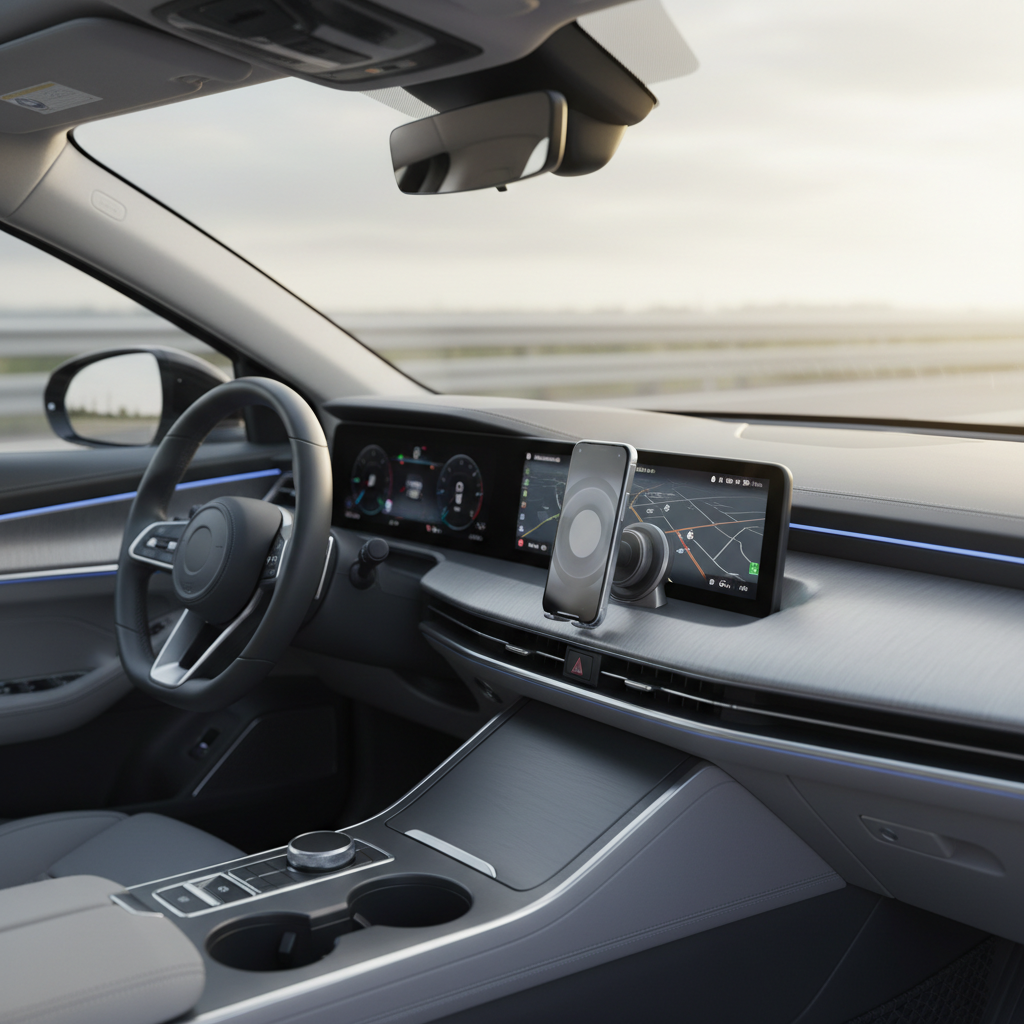
Why magnetic mounts feel “unstable” in real driving
When a magnetic mount fails, it usually fails in predictable ways, sliding off the dash, sagging downward, or the phone twisting during turns. The magnet gets blamed, but the weak link is often somewhere else.
- Mounting surface mismatch: textured dashboards, soft-touch plastics, and curved trim can reduce adhesive grip or suction seal.
- Too much leverage: larger phones and “extended arm” mounts amplify vibration, especially on rough roads.
- Wrong metal ring/plate placement: if the ring sits off-center or too low, the phone tends to rotate.
- Heat cycles: summer heat can soften adhesives and slightly deform some plastics, making a stable install less stable over time.
- MagSafe vs non‑MagSafe confusion: non‑MagSafe phones often rely on a thin plate that can shift under case movement.
According to NHTSA, driver distraction is a major safety concern, so stability isn’t just convenience, it can reduce the temptation to keep adjusting your phone while driving. If a mount forces frequent fiddling, it’s the wrong mount for your setup.
Quick self-check: what “magnetic stable” means for your car
Before you buy, answer these fast. You’ll usually know your best mount type in two minutes.
- Your phone size and weight: big “Pro Max” style phones generally need stronger magnet arrays and shorter arms.
- Your case: thick rugged cases may reduce hold, MagSafe-compatible cases usually behave more predictably.
- Your preferred location: vent, dash, windshield, or cup holder all behave differently over bumps.
- Cabin temperature: if you park in sun often, prioritize mechanical clamping or high-temp rated adhesives.
- Road conditions: city potholes and gravel roads punish long arms and cheap ball joints.
If you mostly drive smooth highways, you can get away with more styles. If you deal with potholes, you want fewer joints, a shorter profile, and a mounting method that can’t peel off easily.
Types of magnetic car phone mounts (and who they fit)
There’s no single winner across every vehicle. The trick is picking a mount style whose weak point doesn’t match your daily stress points.
Vent magnetic mounts
Great when you want eye-level placement and easy removal. Less great if your vents are fragile, oddly shaped, or you rely on strong A/C directed at the phone.
- Best for: lighter phones, shorter commutes, cars with sturdy horizontal vent slats
- Watch out for: vent sagging, phone blocking airflow, heat or cold blasting directly onto the device
Dashboard adhesive magnetic mounts
Often the most stable when installed correctly, because you’re anchoring to a solid surface. The tradeoff is you need to prep the surface and choose the right spot once.
- Best for: drivers who want maximum stability and minimal wobble
- Watch out for: soft-touch dashboards, dusty surfaces, extreme heat, uneven curves
Windshield suction magnetic mounts
Good when dashboards are unsuitable. Some people dislike the look, and in a few cars it can interfere with sight lines, so placement matters.
- Best for: rentals, vehicles with tough dashboards, drivers who want higher placement
- Watch out for: suction losing seal with temperature swings, blocking view
Cup holder magnetic mounts
These can be surprisingly steady because they brace against the console. They’re not as “at-a-glance” as vent/dash, but they avoid adhesive and suction issues.
- Best for: hot climates, cars with problematic dash materials, anyone avoiding vent stress
- Watch out for: lower viewing angle, taking a cup holder, wobbly extender columns
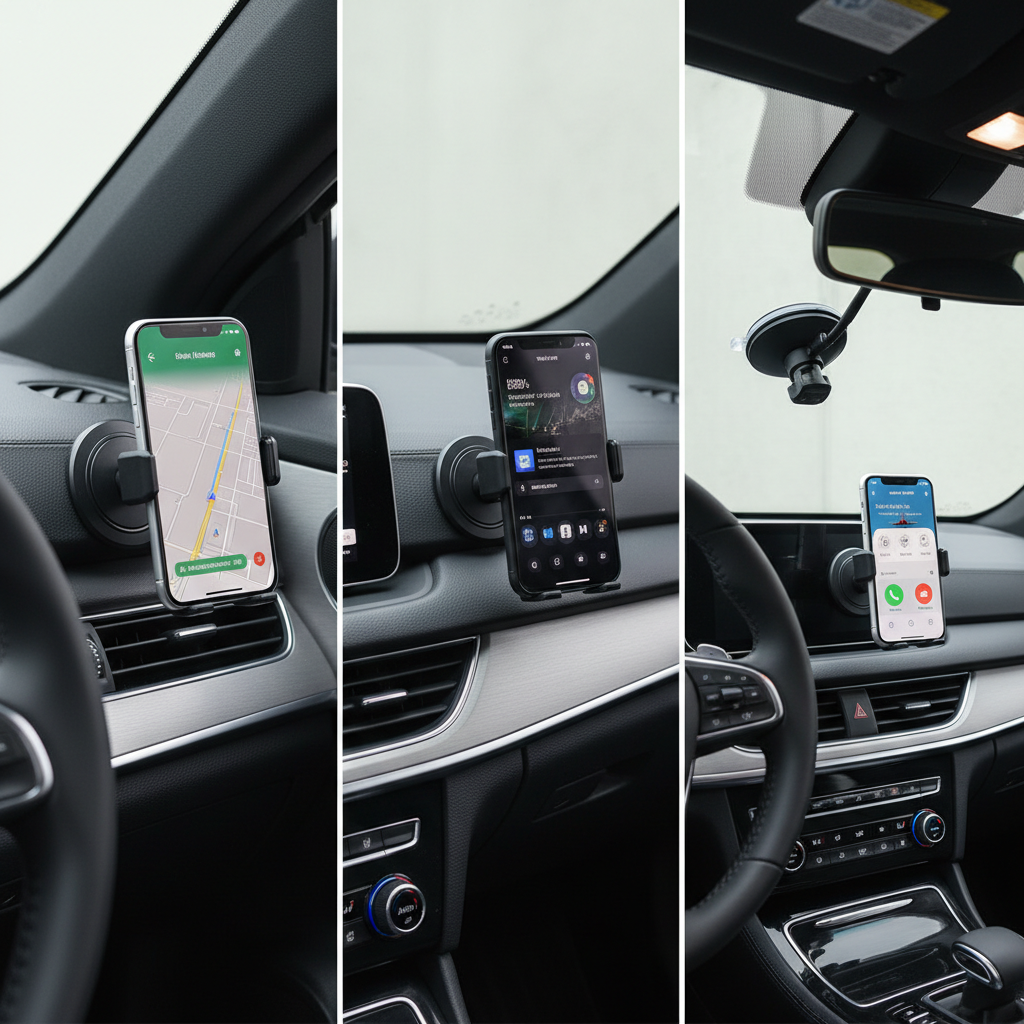
Buying checklist: what to look for in a stable magnetic mount
You can ignore a lot of marketing if you focus on a few physical details. This is where most “best car phone mounts for magnetic” lists quietly differ, even when they don’t say it.
- Magnet layout: a larger magnet array usually resists rotation better than a tiny central magnet.
- Ball joint quality: if the joint can’t hold angle under vibration, the phone droops no matter how strong the magnet is.
- Shorter is steadier: long arms bounce more, especially with heavier phones.
- Mount base quality: for adhesive, look for bases designed for automotive temperatures; for suction, look for a tight locking lever and a clean pad.
- Compatibility approach: MagSafe-style alignment typically gives more consistent “snap” and less spin than generic plates.
Which mount should you choose? A practical comparison table
Use this as a decision shortcut. If two options look close, pick the one that reduces adjustments while driving.
| Mount type | Stability over bumps | Best placement | Common downside | Who it fits |
|---|---|---|---|---|
| Vent magnetic | Medium | Eye-level, near center | Vent sag / airflow blocking | Light-medium phones, sturdy vents |
| Dash adhesive magnetic | High (when installed well) | Dash flat zone | Adhesive prep, heat sensitivity | Drivers prioritizing “set and forget” |
| Windshield suction magnetic | Medium-High | Upper windshield corner/center | View obstruction risk | Dash materials not suitable for adhesive |
| Cup holder magnetic | High (short column) | Center console | Lower glance angle | Hot climates, no-adhesive preference |
Setup steps that make magnetic mounts noticeably more stable
Most returns happen because of install issues, not because the mount is “bad.” Do these and you typically get a different outcome.
1) Pick the location like you’re planning to never move it
Try a dry fit first, sit in driving posture, turn the wheel, check shifter clearance, and make sure the phone doesn’t block your view. If you’re uncertain, a slightly lower placement that stays rock solid often beats a perfect eye-line position that shakes.
2) Clean the surface properly (especially for adhesive and suction)
Dust, interior protectants, and skin oils weaken adhesion. Use a gentle cleaner appropriate for your interior, let it fully dry, then mount. If your dash is soft-touch rubberized, test a less visible spot first because adhesives can react differently by material.
3) Place the magnetic ring/plate for anti-rotation
Centering matters, and so does height. Many cases work best when the ring sits centered around the phone’s internal coil area, but case designs vary. If your phone twists when you hit bumps, the ring placement is usually the first thing to revisit.
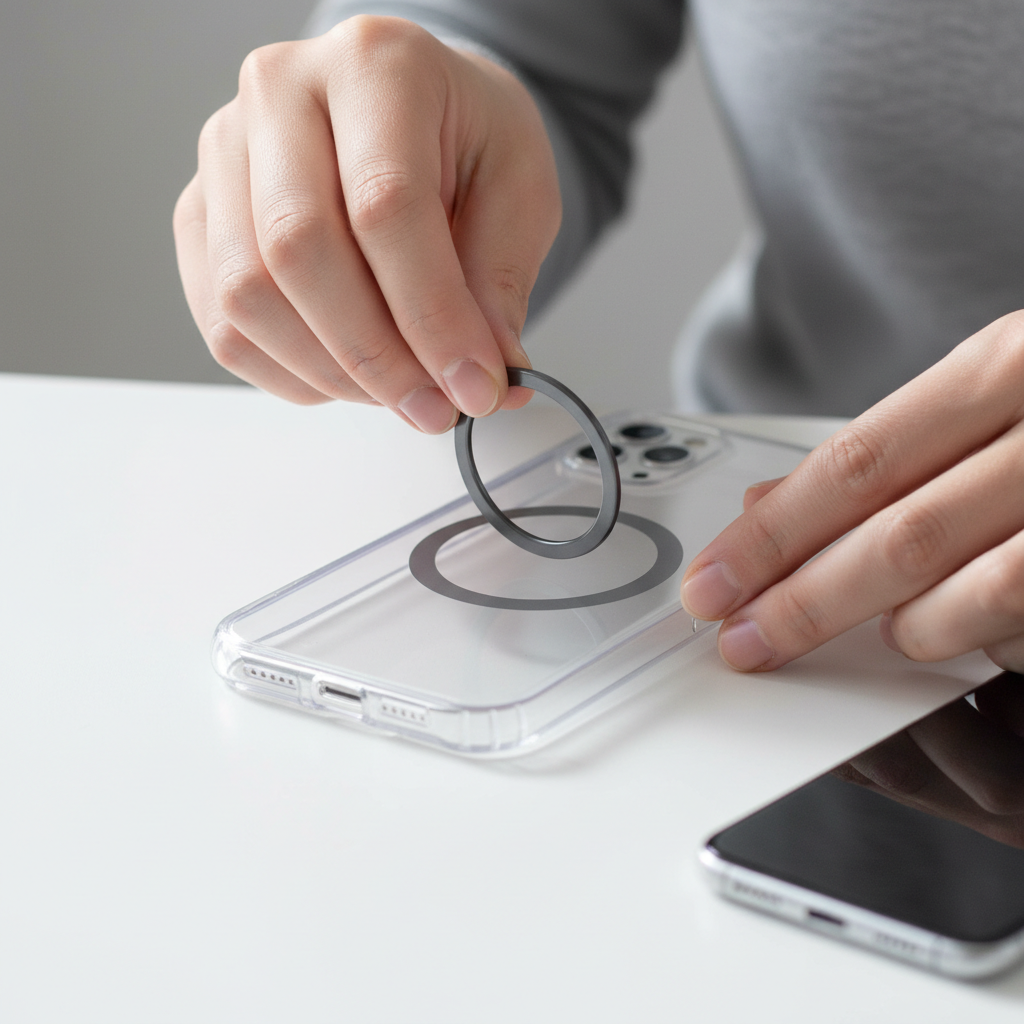
4) Reduce wobble by minimizing joints
If your mount has multiple swivels, lock down what you don’t need. Every extra joint is another place vibration turns into movement. For heavier phones, a short mount with one strong joint usually beats a long arm with three adjustments.
Key takeaways (save this)
- Stability is a system: magnet + joint + base + surface + ring placement.
- Shorter profile wins: long arms look flexible but bounce more.
- Heat changes everything: choose mount type with your climate in mind.
Common mistakes to avoid (so you don’t buy twice)
- Chasing maximum magnet strength only: a weak joint still droops, and a strong magnet can be annoying if it makes removal awkward.
- Mounting on “pretty” trim: curved glossy pieces can look ideal but often fail adhesion and can leave marks.
- Assuming all MagSafe cases behave the same: alignment and thickness vary, so stability can vary too.
- Ignoring cable routing: a tight charging cable can pull the phone off-angle and create constant twist.
If you’re trying to make an unstable setup work by adding extra adhesive pads, double-stacking plates, or over-tightening joints, that’s usually a sign the mount style is mismatched to your car.
When it’s worth getting professional help (or at least a second opinion)
If you drive a vehicle with advanced driver-assistance sensors near the windshield, or you’re unsure what’s legal or safe placement in your state, consider asking a qualified installer or checking your vehicle manual. A mount that blocks your view or interferes with airbags can introduce risk, and in some cases you may want advice from a professional.
Also, if you’re using a mount while doing delivery or rideshare work, the setup gets more demanding, you’ll touch the phone more often, and durability matters more than aesthetics, so it can be worth paying for a sturdier mounting method.
Conclusion: picking the “best” magnetic mount in 2026 is mostly about fit
The best choice usually comes down to where your car can anchor a mount securely, how heavy your phone is, and whether your climate punishes adhesives or suction. If you want a safer, calmer drive, prioritize a stable base and a stiff joint, then fine-tune ring placement so the phone stops twisting.
Action steps: choose your mounting location first, then pick the mount type that matches that surface, and finally install the ring carefully. If your current setup shakes, don’t automatically upgrade the magnet, fix the leverage and the base.
FAQ
- What are the best car phone mounts for magnetic stability on bumpy roads?
Many drivers get the most stability from a well-installed dashboard adhesive mount or a short, sturdy cup holder mount, because both reduce wobble and don’t rely on vent flex. - Do MagSafe-style magnetic mounts hold better than metal-plate mounts?
Often they feel more consistent because alignment is guided, which can reduce rotation. Non‑MagSafe plates can still work, but placement and case thickness matter more. - Why does my phone slowly droop even when the magnet feels strong?
This is typically a ball joint or pivot that can’t hold torque under vibration. A mount with a stronger joint, shorter arm, or fewer swivels usually solves it. - Is a windshield suction magnetic mount safe?
It can be, but placement matters. Avoid blocking your view and be mindful of airbags and sensors. If you’re unsure, check your vehicle manual or ask a professional installer. - Will heat make my magnetic mount fall off?
It can, especially for adhesive bases on certain dash materials. If you park in direct sun, consider vent or cup holder styles, or use an adhesive base designed for automotive temperatures. - Where should I place the metal ring on my case for the most stability?
Center placement usually reduces twisting, but exact “best” placement depends on the case and the mount’s magnet layout. If the phone rotates, adjust the ring slightly and re-test. - Can magnetic mounts damage my phone or affect GPS?
Modern phones are generally designed to handle common magnetic accessories, but outcomes can vary by device and accessory. If you notice abnormal behavior, stop using the accessory and consult the phone manufacturer.
If you’re trying to pick between vent, dash, windshield, and cup holder options and want a more “set it once” result, start by mapping your car’s best mounting surface and your phone’s weight, then choose the simplest, shortest mount that fits that spot, it’s usually the most stable path.