
How to change a flat tire safely comes down to two things, controlling the situation on the roadside, and following a simple, repeatable order of steps so the car never surprises you.
If you have ever stood next to traffic wondering whether you even have the right tools, you already know why this matters, a flat rarely happens in a convenient place, and small mistakes like lifting the car on soft ground can turn a quick fix into a bigger problem.
This guide focuses on the practical version, what to do, what to check, and what to skip, plus a quick table for tool options, a troubleshooting section for stuck lug nuts, and clear “stop here” moments when calling roadside assistance is the smarter move.
Before you touch the jack: make the scene safe
Your first job is not the wheel, it is creating space and stability. Signal early, slow down, and pull as far off the road as you can while keeping the car on firm, level ground. A flat on a narrow shoulder is one of those times when “I can do this” is less important than “I can do this safely.”

Do this checklist before you kneel down:
- Hazard lights on, and if you have them, set reflective triangles or flares behind the vehicle.
- Parking brake engaged, keep the car in Park for automatics, or in gear for manuals.
- Everyone out of the traffic side, passengers should wait well away from the roadway.
- Wheel chock or a sturdy substitute placed on the opposite end of the car, a brick can work in a pinch but can also crumble.
According to NHTSA, moving to a safe location and using hazard flashers are basic steps to reduce crash risk during roadside emergencies. If you cannot get a stable spot, it is usually better to call for help than to “make it work.”
What you need (and what helps more than you think)
Most cars include a basic jack and lug wrench, but the difference between “possible” and “easy” is often one extra tool, a tire pressure gauge, a headlamp, or a compact torque wrench for reinstallation. If you want to learn how to change a flat tire without a lot of struggle, set your kit up once and leave it in the trunk.
Here is a practical tool table, not a shopping list, just what each item changes in the process.
| Item | Usually included? | Why it matters | Notes |
|---|---|---|---|
| Spare tire (donut or full-size) | Sometimes | Gets you rolling again | Check inflation a few times a year |
| Jack | Often | Lifts the car at the correct point | Use only on firm, level ground |
| Lug wrench | Often | Loosens and tightens lug nuts | A cross wrench adds leverage |
| Wheel chock | No | Prevents rolling while lifted | Small and cheap, big safety gain |
| Tire pressure gauge | No | Confirms spare pressure | Donuts often sit underinflated |
| Torque wrench | No | Helps hit correct lug torque | Prevents over/under-tightening |
Step-by-step: how to change a flat tire (the order matters)
This is the sequence that keeps the car stable and the job calm. The biggest “rookie mistake” is lifting the vehicle first, then fighting lug nuts while the car wobbles on the jack.
1) Confirm it is actually a flat, and locate your jack points
Look for obvious sidewall damage, a nail, or a fully collapsed tire. Then find the jack point in your owner’s manual, or the reinforced pinch weld area under the rocker panel on many vehicles. If you are unsure, pause and verify, jacking in the wrong place can bend body panels or damage the undercarriage.
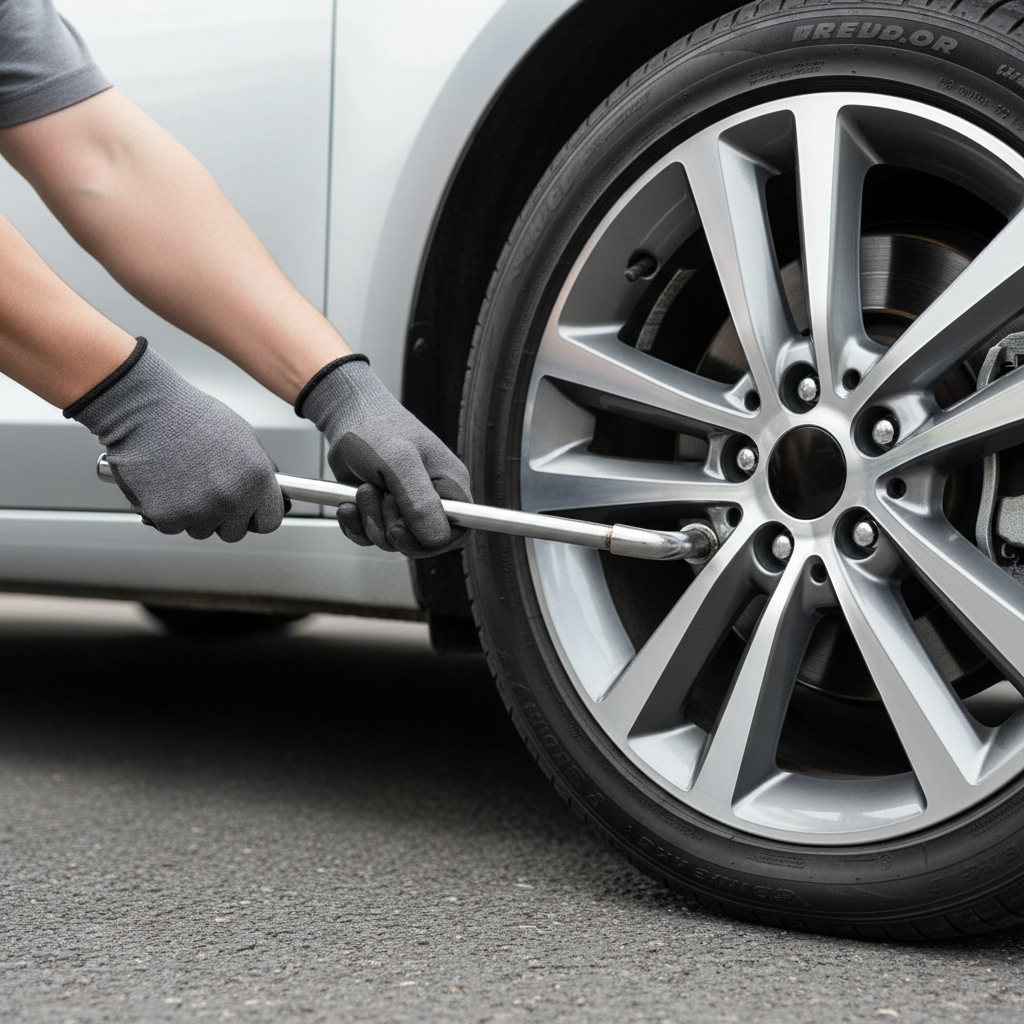
2) Loosen lug nuts while the tire is still on the ground
Break each lug nut loose about a quarter to half turn. Press down with your body weight if needed, but keep your footing stable. If your car has a locking lug nut, find the key before you go further.
- Tip: Turn counterclockwise to loosen. It sounds obvious, until you are stressed on the shoulder.
- Don’t remove them yet, just crack them loose.
3) Place the jack, then lift until the tire clears the ground
Set the jack on firm ground, align it with the correct lift point, then raise the vehicle slowly. Lift only as high as needed for the flat tire to come off without dragging.
If the jack starts to tilt, sink, or shift, lower the vehicle and reposition. Gravel, hot asphalt, and sloped shoulders are common trouble spots.
4) Remove the lug nuts and take off the flat tire
Now remove lug nuts fully, put them somewhere they cannot roll away, a small tray, a hat turned upside down, even the wheel cover can help. Pull the wheel straight toward you. If it sticks, a firm kick to the tire sidewall can break it free, but keep your body out of the “under the car” zone.
5) Install the spare, hand-tighten lug nuts in a star pattern
Line up the holes and push the spare onto the hub. Thread lug nuts by hand first so you do not cross-thread. Tighten in a star pattern, this seats the wheel evenly.
- 5-lug pattern: go across the circle, not around it.
- 4-lug pattern: alternate opposite corners.
6) Lower the car, then tighten lug nuts firmly (ideally to spec)
Lower until the tire touches the ground with some weight on it, then tighten lug nuts again in a star pattern. Fully lower and remove the jack, then do a final tighten pass.
For the most accurate result, use a torque wrench and your vehicle’s torque specification from the manual. Under-tightening can allow wheel movement, over-tightening can damage studs, and both can create problems later.
Fast self-check: is it a spare tire job or a “call for help” situation?
Some flats are straightforward. Others look similar but carry extra risk. Use this quick list before you commit to the change.
- Okay to proceed: flat on a level surface, you have a spare and jack, lug nuts are not seized, you can stand well away from moving traffic.
- Proceed with caution: nighttime with poor visibility, narrow shoulder, rain or snow, low cell signal, missing wheel chock, spare pressure unknown.
- Call roadside assistance: unsafe shoulder, jack will sit on soft ground, you have run-flat damage to the wheel, missing lug key, spare is flat, or you feel unsure handling it.
According to AAA, many drivers encounter preventable delays due to missing tools or an underinflated spare. If your spare looks low, inflate before driving if you have access to air, or call for help rather than limping on an unsafe spare.
Common problems, quick fixes that usually work
When people search how to change a flat tire, they are often stuck on one annoying detail, not the whole process. Here are the issues that come up most.
Lug nuts will not budge
- Use more leverage, a longer wrench, or carefully use your body weight while keeping balance.
- If you have penetrating oil, a short wait can help, but roadside conditions may not allow it.
- If you feel the stud twisting or the wrench slipping, stop and consider assistance, broken studs can strand you.
The wheel is stuck to the hub
- After removing lug nuts, sit facing the wheel and push-kick the tire sidewall, not the rim.
- Never crawl under the car to push from behind the wheel.
Spare tire is a donut and the ride feels weird
That is normal to a point. Donuts have different handling and braking feel, and they are intended for short, cautious driving. Follow the speed and distance limits printed on the spare sidewall, and plan a proper repair or replacement soon.
After the change: what to do in the next 30 minutes
Most people stop once the car moves, but two small habits reduce the chance of a second headache.

- Recheck lug tightness after 25–50 miles if you cannot torque to spec on the roadside, many shops recommend a quick check because wheels can settle.
- Check spare pressure as soon as you reach a safe place with an air pump, especially if it is a donut.
- Store the flat tire securely so it cannot move in the trunk, and keep the valve stem accessible for repair.
If the tire failed from a sidewall tear or impact, repair may not be recommended, a tire shop can confirm. According to Tire Industry Association guidance commonly referenced in training, sidewall damage often requires replacement rather than a plug.
Key takeaways (so you remember it under stress)
- Safety and stability first, hazard lights, parking brake, chock, and firm ground matter more than speed.
- Loosen lug nuts before lifting, it keeps the vehicle steady and your knuckles safer.
- Star pattern tightening helps the wheel seat evenly and reduces vibration risk.
- Donut spares are temporary, drive cautiously and plan a proper fix quickly.
Conclusion: get back on the road, then finish the job properly
Once you know how to change a flat tire, the whole task is less about strength and more about doing the steps in the right order, in a spot that feels controlled. If anything about the location, tools, or wheel hardware looks questionable, calling roadside assistance is not failure, it is good judgment.
Your next action is simple, check your spare pressure this week, confirm your jack and lug key are present, and if you want extra confidence, practice the steps once at home where there is no traffic and no pressure.