
How to check car engine misfire symptoms starts with separating “feels rough” from a true misfire, because the right fix depends on whether one cylinder is failing to burn fuel, or something else is making the engine run unevenly.
If you’ve felt shaking at idle, hesitation on acceleration, or a blinking Check Engine Light, you’re right to pay attention, misfires can lead to catalytic converter damage and poor fuel economy, and they often show up right when you need the car to be dependable.
This guide walks you through what misfires look like in real driving, a quick self-check list, a few DIY-friendly confirmation steps, and when it’s smarter to stop and get a pro diagnosis.
What an engine misfire really is (and why it matters)
A misfire means a cylinder doesn’t contribute power when it should, usually because spark, fuel, or compression is missing or inconsistent. You feel it as a stumble, a shake, or a “dead spot” in power.
The reason it matters is simple: unburned fuel can overheat the catalytic converter, and repeated misfires can stress ignition parts and even wash oil from cylinder walls in some scenarios. According to U.S. EPA, engine misfires can increase emissions and trigger diagnostic trouble codes that help pinpoint the fault.
- Steady misfire: more noticeable, consistent shaking or loss of power.
- Intermittent misfire: comes and goes, often heat-related or load-related.
- Random vs. cylinder-specific: scanners may show P0300 (random) or P0301–P0308 (specific cylinder).
Common misfire symptoms you can feel, hear, or smell
Some symptoms are obvious, others are subtle enough that people keep driving for weeks. Here are the ones that most often point to a true misfire rather than a generic “rough running” complaint.
- Rough idle: steering wheel or seat vibration that doesn’t smooth out.
- Hesitation: lag or stumble when you tip into the throttle.
- Loss of power under load: climbing a hill, merging, towing.
- Check Engine Light: blinking is more urgent than steady.
- Fuel smell: can suggest unburned fuel, use caution.
- Popping from exhaust: sometimes on decel, sometimes at idle.
- Worse fuel mileage: not always immediate, but common.
Key point: if the Check Engine Light is blinking, many technicians treat it as “reduce load and address soon,” because the risk of catalyst damage is higher. If you’re unsure, it’s reasonable to limit driving and seek professional help.
Why misfires happen: the real-world causes (spark, fuel, air, compression)
Most misfires land in a few buckets. The tricky part is that two different failures can feel identical from the driver’s seat.
Ignition (spark) problems
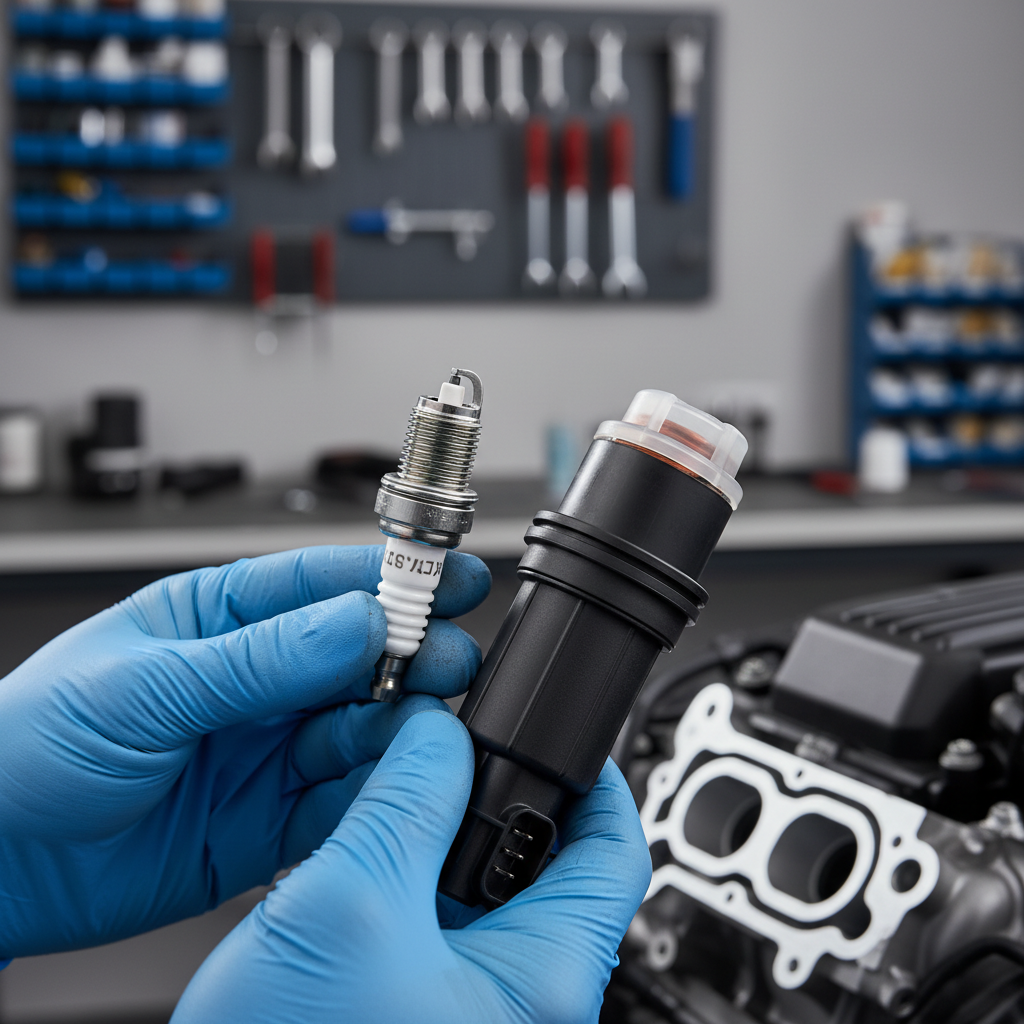
- Worn spark plugs, incorrect gap, or wrong plug type
- Failing ignition coil (coil-on-plug is common on modern cars)
- Cracked plug boot, moisture intrusion, poor electrical connection
Fuel delivery issues
- Clogged or failing injector
- Low fuel pressure (pump, filter, regulator, depending on design)
- Bad fuel quality, water contamination in some cases
Air and mixture control
- Vacuum leak (intake hose, gasket, PCV-related issues)
- Dirty mass airflow sensor or throttle body, depending on vehicle
Mechanical (compression/timing) causes
- Low compression (valve issue, ring wear, head gasket concerns)
- Timing problems (timing chain/belt wear, cam/crank correlation)
According to SAE International, OBD-II misfire monitoring uses crankshaft speed fluctuations to detect combustion irregularities, which is why codes can appear even when the car only “sort of” feels off.
Quick self-check: are you likely dealing with a misfire?
This is a fast way to decide whether to keep troubleshooting yourself, or whether you’re probably in “scan it and diagnose” territory.
- Does it shake most at idle? Often points to ignition, vacuum leak, or injector imbalance.
- Does it misfire mainly under acceleration? Often points to weak spark, coil breakdown, or fuel pressure problems.
- Is the Check Engine Light blinking? Treat as higher priority, reduce load.
- Any recent maintenance? Plug change, coil replacement, air intake work, fuel system cleaner, those can introduce connection or installation issues.
- Any water exposure? Heavy rain, engine wash, deep puddles can trigger coil/connector problems.
- Does it improve when warm? Sometimes points to moisture, sometimes to vacuum leaks that change with heat.
If your answers point strongly to one pattern, you can start with the most likely system. If symptoms are mixed, it’s usually smarter to scan for codes before swapping parts.
How to confirm a misfire: practical checks (DIY-friendly)
When people search how to check car engine misfire symptoms, they often want a clear sequence that avoids “replace everything.” Here’s a realistic approach you can do with basic tools.
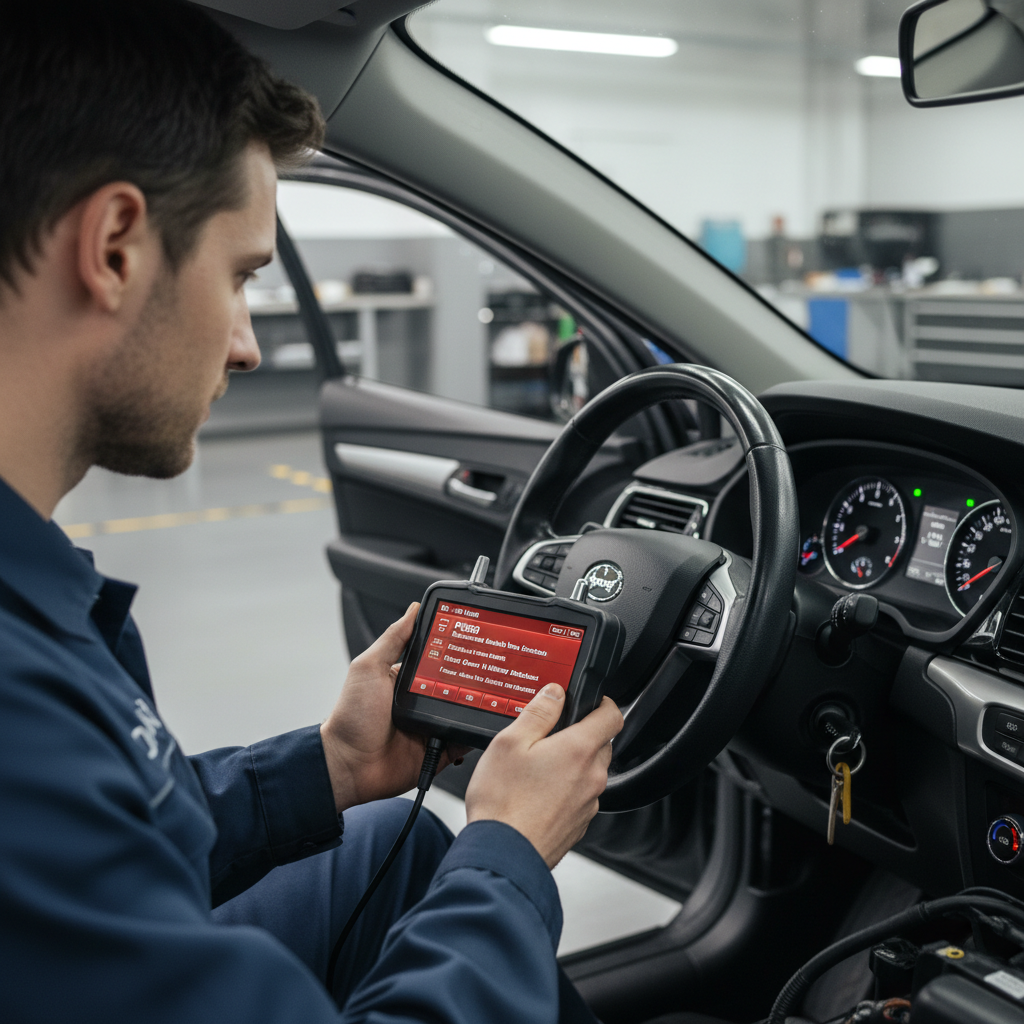
1) Read codes and freeze-frame data
Use an OBD-II scanner. Look for P0300 (random) or P0301–P0308 (cylinder-specific). Freeze-frame data tells you conditions when the fault set, engine load, RPM, coolant temp, which can reveal whether it happens at idle, cruise, or acceleration.
- Cylinder-specific code: start with plug/coil/injector on that cylinder.
- Random misfire: look for mixture issues (vacuum leaks, fuel pressure) or multiple weak ignition components.
2) Check the basics under the hood
- Loose intake tube, cracked hoses, disconnected vacuum line
- Coil connectors not fully seated
- Oil in plug wells (valve cover gasket seep can cause secondary ignition issues)
- Obvious arcing marks on coil boots (sometimes visible as white tracking lines)
3) Swap-test ignition components (when appropriate)
If you have a single-cylinder misfire code and coil-on-plug, swapping the coil to another cylinder can be a clean test. If the code follows the coil, you likely found the culprit. The same idea can work for spark plugs, but only if they’re accessible and you can reinstall correctly.
4) Use misfire counters (if your scan tool supports it)
Many scanners show live misfire counts by cylinder. This helps catch intermittent misfires without guessing. If one cylinder racks up counts while others stay calm, that’s valuable direction.
5) Fuel and injector hints
If ignition checks out, injector imbalance becomes more likely. A professional shop may do an injector balance test or use a scope. DIY options are limited, but you can listen for injector clicking with a mechanic’s stethoscope and look for wiring issues.
Fixes by scenario: what usually works (and what to avoid)
There’s no universal “one part fixes it,” but there are patterns. Below is a practical table to connect symptom patterns to next steps.
| What you notice | What it often points to | Good next step | Avoid this |
|---|---|---|---|
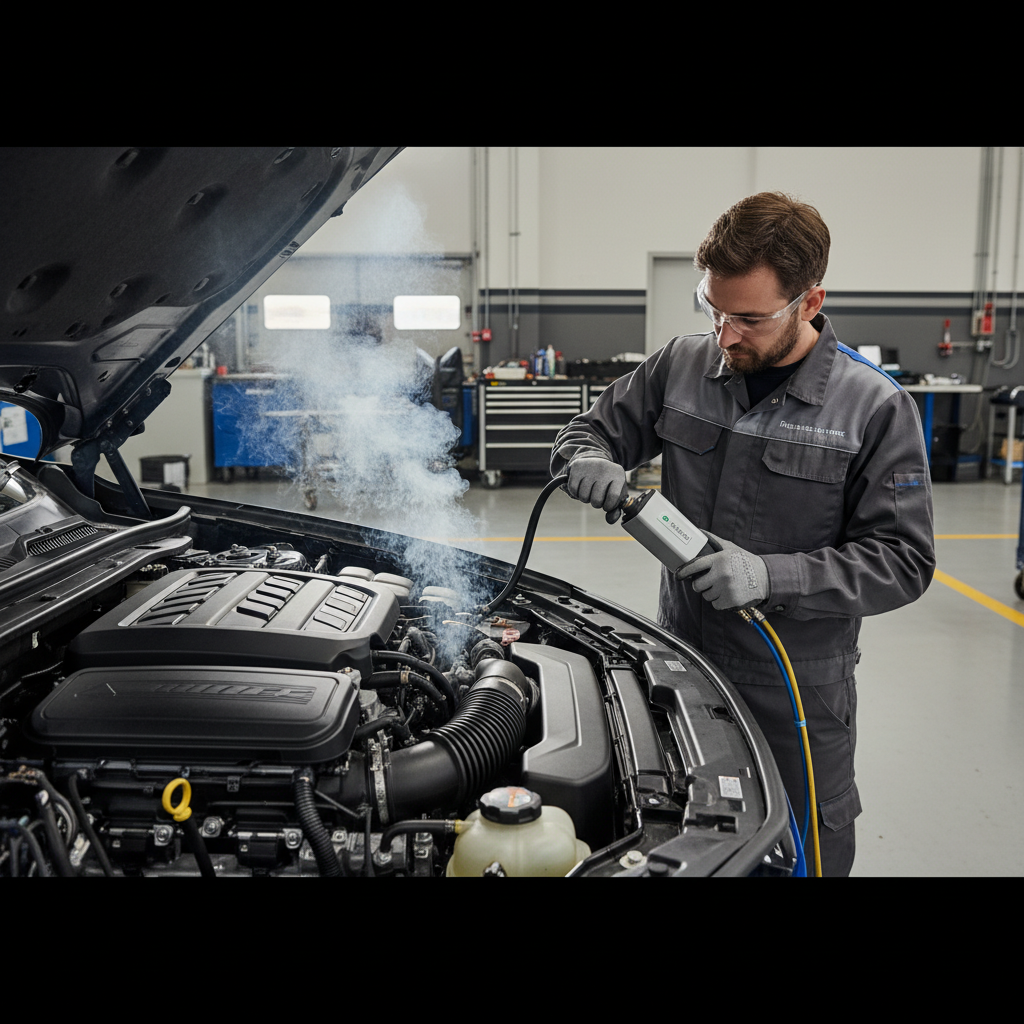
| Misfire at idle, improves with RPM | Vacuum leak, dirty throttle body, weak plug | Smoke test (shop) or inspect hoses, check plugs | Throwing injectors at it without confirmation |
| Misfire under load/acceleration | Coil breakdown, plug gap, fuel pressure | Swap-test coil, verify plug spec, check fuel trims | Ignoring it because idle feels “fine” |
| Single-cylinder code (P0302 etc.) | Plug/coil/injector on that cylinder | Swap-test coil/plug, inspect plug well for oil | Replacing all coils immediately if budget is tight |
| Random misfire (P0300) | Mixture issue, multiple weak ignition parts | Check intake leaks, fuel trims, maintenance history | Clearing codes repeatedly to “see if it goes away” |
| Shaking + blinking CEL | Active severe misfire | Reduce load, diagnose ASAP | Long highway drive “to burn it out” |
For many daily drivers, the highest-return fixes are boring: correct spark plugs, one weak coil, repairing a split hose, or reseating a connector. When compression is low, fixes become more involved and diagnosis matters more than parts.
Common mistakes that make misfires worse
- Replacing parts without reading codes: it’s easy to spend money and still have the same miss.
- Mixing plug types or incorrect torque: modern engines can be picky about plug design and installation.
- Ignoring vacuum leaks: a small leak can mimic bad ignition parts, especially at idle.
- Clearing codes too early: you lose freeze-frame clues that tell you when it happens.
- Driving hard with a blinking light: this can be expensive if it overheats the catalyst.
If you’re doing DIY work, grab the correct plug spec (heat range and gap) and torque procedure for your exact engine. According to AAA, keeping up with routine maintenance like spark plug replacement intervals helps prevent drivability problems that can snowball into bigger repairs.
When to stop DIY and get professional diagnostics
Some misfires are straightforward, others are rabbit holes. It’s reasonable to book a shop visit when:
- The Check Engine Light blinks or the car feels unsafe to merge into traffic
- You see misfire codes plus catalyst efficiency or fuel trim codes, suggesting a broader issue
- You’ve verified plugs/coils and the misfire persists
- There are signs of mechanical trouble, low compression suspicion, coolant loss, overheating
A professional may run a compression test, leak-down test, smoke test, fuel pressure test, or use an oscilloscope for ignition and injector waveforms. That sounds fancy, but the point is simple: it narrows the problem before you buy more parts.
Conclusion: a clean way to move from symptoms to the right fix
If you’re trying to figure out how to check car engine misfire symptoms, focus on pattern first, then confirmation. Read the codes, look at when it happens, and test one system at a time instead of guessing.
- Action step 1: scan for codes and capture freeze-frame data before you clear anything.
- Action step 2: if it’s cylinder-specific, start with plug/coil checks and swap-testing.
If the car shows a blinking light, strong fuel smell, or severe shaking, it’s usually worth limiting driving and talking with a qualified mechanic, the cheaper move often is “diagnose once, fix once.”
FAQ
How do I know if it’s a misfire or just a rough idle?
A misfire often feels like a repeating stumble and may set P0300 or P0301–P0308 codes. Rough idle without misfire codes can still be air/fuel related, but scanning for codes and checking fuel trims gives you a clearer answer.
Can a bad spark plug cause an intermittent misfire only under acceleration?
Yes, that pattern is common. Under load the spark needs more voltage to jump the gap, so a worn plug or weak coil can fail mainly during acceleration even if idle seems acceptable.
Is it safe to drive with a misfire?
Sometimes you can limp a short distance, but risk depends on severity. A blinking Check Engine Light suggests an active misfire that could damage the catalytic converter, so reducing load and getting it checked soon is a safer approach.
What does code P0300 mean compared to P0301?
P0300 usually indicates random/multiple-cylinder misfire detection, while P0301 points to cylinder 1 specifically. Cylinder-specific codes make targeted testing easier, random codes often push you toward mixture leaks, fuel pressure, or multiple weak ignition parts.
Will fuel injector cleaner fix a misfire?
It might help if the cause is mild deposit-related injector restriction, but it won’t fix a dead coil, a vacuum leak, or low compression. If you try it, treat it as a low-risk experiment, not a guaranteed solution.
How do I check for a vacuum leak without special tools?
You can inspect hoses and listen for hissing, and look for cracked intake boots. A smoke test is more reliable, so if you suspect a leak and can’t find it visually, a shop test often saves time.
Can a misfire damage my catalytic converter?
It can, especially if unburned fuel reaches the converter for an extended period. That’s one reason technicians take persistent misfires and blinking lights seriously.
Why does the misfire go away when the engine warms up?
Heat can change electrical resistance, seal small leaks, or dry moisture in ignition components, so symptoms may shift. It’s still worth scanning and checking, because “warm = fine” doesn’t always mean the underlying cause is gone.
If you’re dealing with a repeating stumble and want a more efficient path than swapping parts, a basic OBD-II scan plus a targeted checklist can save a lot of time, and if you’d rather not DIY, bringing freeze-frame data and symptom notes to a local shop usually makes the diagnosis quicker.