
Best car seat cushions for long drives usually come down to one thing: keeping your hips and lower back supported without cutting off circulation, so you don’t step out of the car feeling stiff, sore, or slightly numb.
If you’ve ever tried a random “memory foam pad” and still felt pressure on your tailbone, you already know the problem, comfort is specific. Your height, seat shape, posture, and even where you tend to feel pain all change what “best” looks like.
This guide breaks down cushion types (and who they’re actually for), a quick self-check to narrow choices, and a practical way to test fit in your own car, plus a comparison table you can screenshot before you shop.
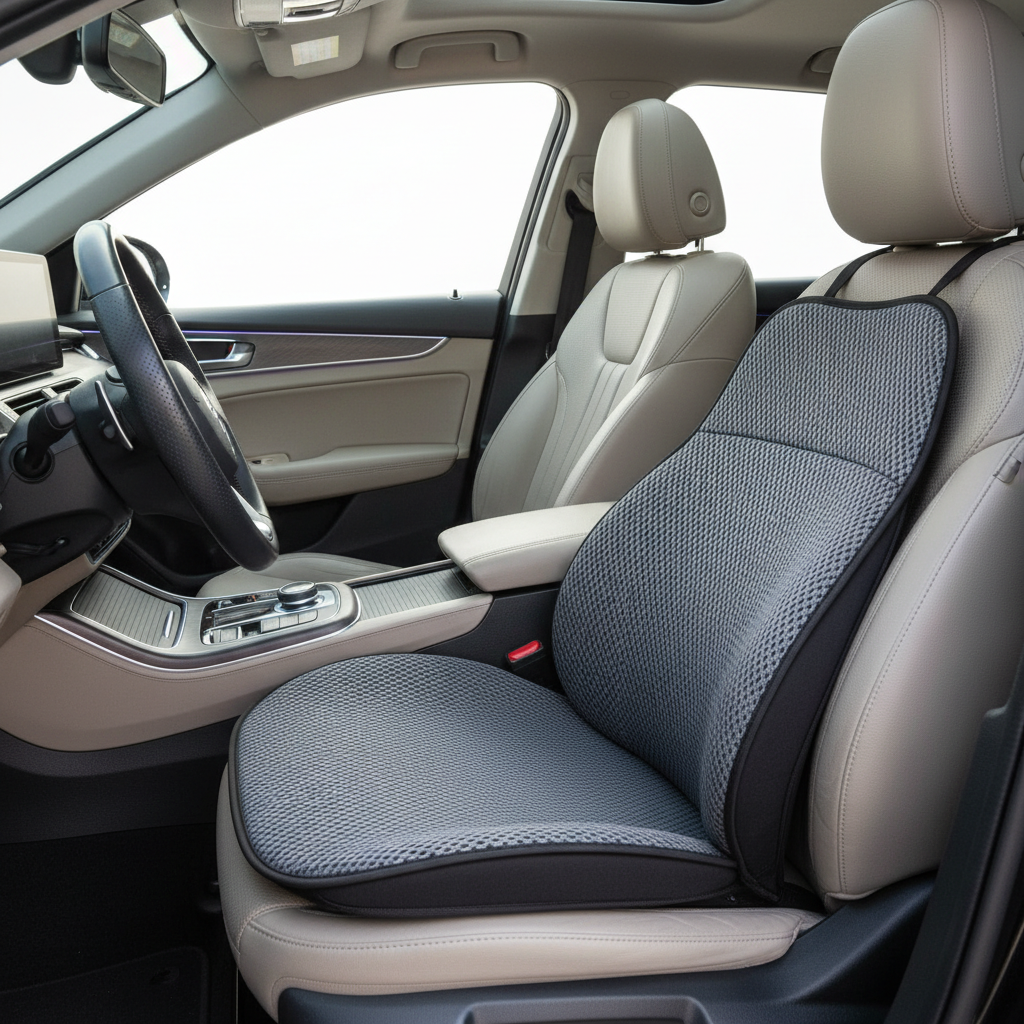
What makes a car seat cushion “best” for long drives
For longer trips, comfort isn’t just softness. Too-soft cushions can feel great for 10 minutes, then your pelvis sinks, your spine rounds, and your lower back starts doing overtime.
- Pressure distribution: A good cushion spreads load across thighs and sit bones, instead of concentrating it at the tailbone.
- Posture support: Mild lift can help, but the real win is keeping a neutral pelvis so your lumbar spine stays supported.
- Breathability: Heat buildup makes you fidget, and fidgeting becomes fatigue on long drives.
- Seat stability: If it slides, bunches, or changes your reach to the pedals, it’s not a long-drive solution.
- Fit to your car seat: Buckets, flat benches, sport bolsters, and worn cushions all behave differently.
According to NHTSA, drivers should maintain a seating position that allows full control of the vehicle; if a cushion changes your seating height or distance to pedals in a way that feels “off,” treat that as a safety issue, not just a comfort preference.
Quick comparison table: cushion types and who they suit
If you want the fastest path to a short list, start here. Then we’ll refine it with a self-check.
| Type | Best for | What to watch | Typical feel |
|---|---|---|---|
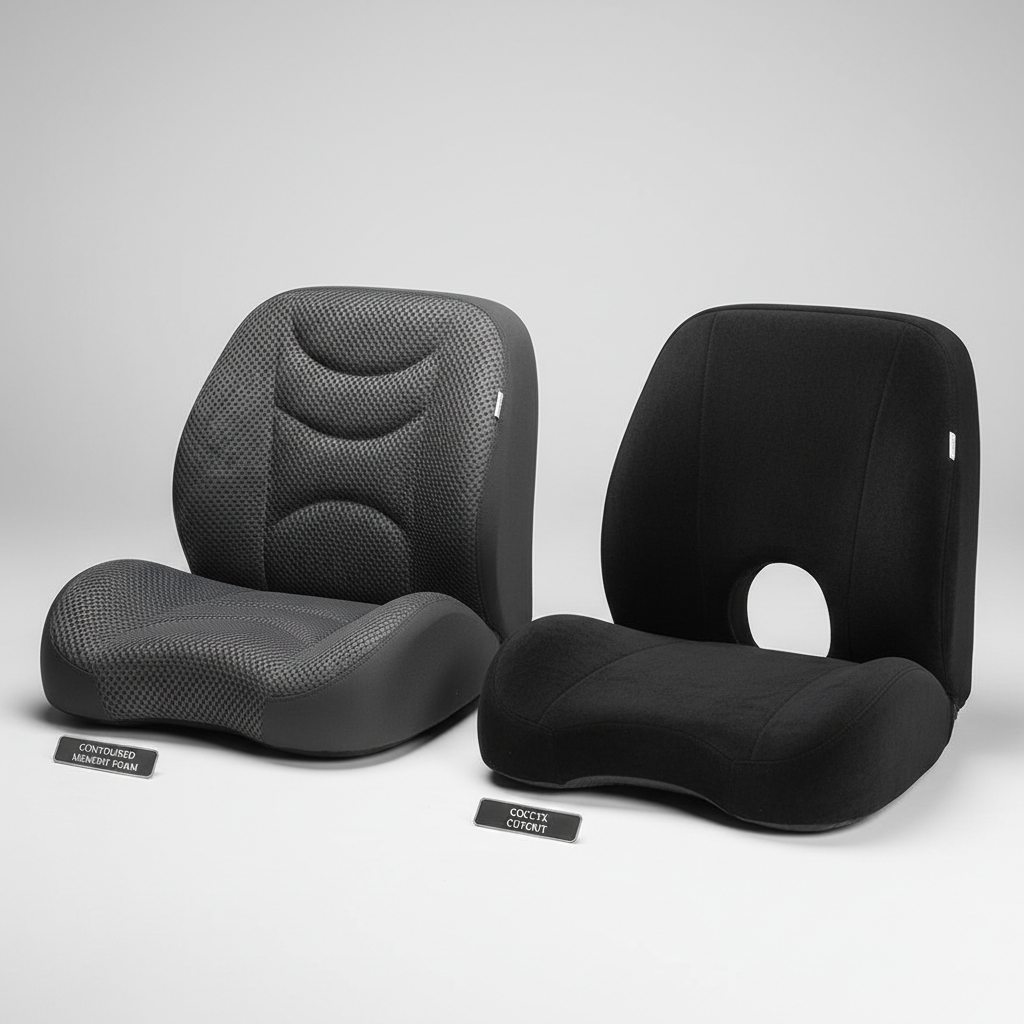
| High-density memory foam (contoured) | General long-drive comfort, mild hip/tailbone pressure | Too thick can raise you and change pedal reach | Supportive, “hugging” |
| Gel-infused foam or gel top layer | Hot sleepers, warm climates, long summer trips | Some gel pads feel squishy and bottom out | Cooler, slightly springy |
| Coccyx cutout cushion | Tailbone sensitivity, pressure when sitting | Cutout placement must match your anatomy | Relief at center back |
| Wedge/forward-tilt cushion | Slouching, tight hips, mild low-back fatigue | Too steep can feel like you’re sliding forward | More “upright” posture |
| Lumbar support pillow (add-on) | Low-back ache, seats with flat backrests | Overfilling the lumbar can create strain | Noticeable back support |
| Air/adjustable lumbar cushion | People who need micro-adjustments on long drives | Pumps/leaks, can feel unstable if overinflated | Tunable firmness |
Self-check: pick the right cushion based on your pain pattern
This part matters because “best car seat cushions for long drives” is really a matching exercise. Use these cues to narrow down what to buy.
If your tailbone hurts
- Look for a coccyx cutout or a deep rear channel.
- Prioritize firmer foam so you don’t bottom out onto the seat.
- Avoid thick, plush pads that create a “hammock” feel.
If your hips go numb or your legs tingle
- Choose a cushion with wide thigh support and gentle contouring.
- Check front edge height, if it presses into the back of your thighs, circulation can feel worse.
- Consider a breathable cover if heat makes you squirm.
If your lower back tightens after 60–90 minutes
- Most people do better with a lumbar pillow plus a moderate seat cushion than a cushion alone.
- A slight forward wedge can help if you tend to slump, but subtle is safer than aggressive.
If you’re tall, short, or share the car
- Shorter drivers often need to be careful with thickness; raising the seat can change sight lines and pedal angle.
- Taller drivers often benefit from pressure distribution over “extra height.”
- If multiple drivers share a vehicle, adjustable lumbar or a thinner contoured cushion can reduce re-adjustment drama.
How to choose: the features that actually matter
Product listings love big promises, but a few specs and design choices do most of the work.
Thickness and density (more important than brand)
- Too thick: you sit “on top,” feel perched, and may lose stable contact with the backrest.
- Too soft: you sink, pelvis rolls back, and you end up chasing comfort by shifting.
- Look for “high-density” language, but also read reviews for bottoming out, that’s the real tell.
Cover material and heat management
- Mesh or breathable knits often feel better for long drives than slick polyester.
- If you sweat easily, gel-infused foam can help, but it’s not magic; airflow still matters.
Non-slip base and secure fit
- A grippy bottom reduces micro-movement, which reduces fatigue.
- Straps can help, but they need to work with your seat design and not interfere with controls.
Compatibility with your seat shape
- Deep bucket seats: avoid overly wide cushions that ride up on the bolsters.
- Flat seats: contoured cushions and lumbar pillows often feel more “locked in.”
Real-world setup: making a cushion work in your car (not just in your living room)
Even the best-reviewed option can disappoint if it changes your driving position. This is the part people skip, then blame the cushion.
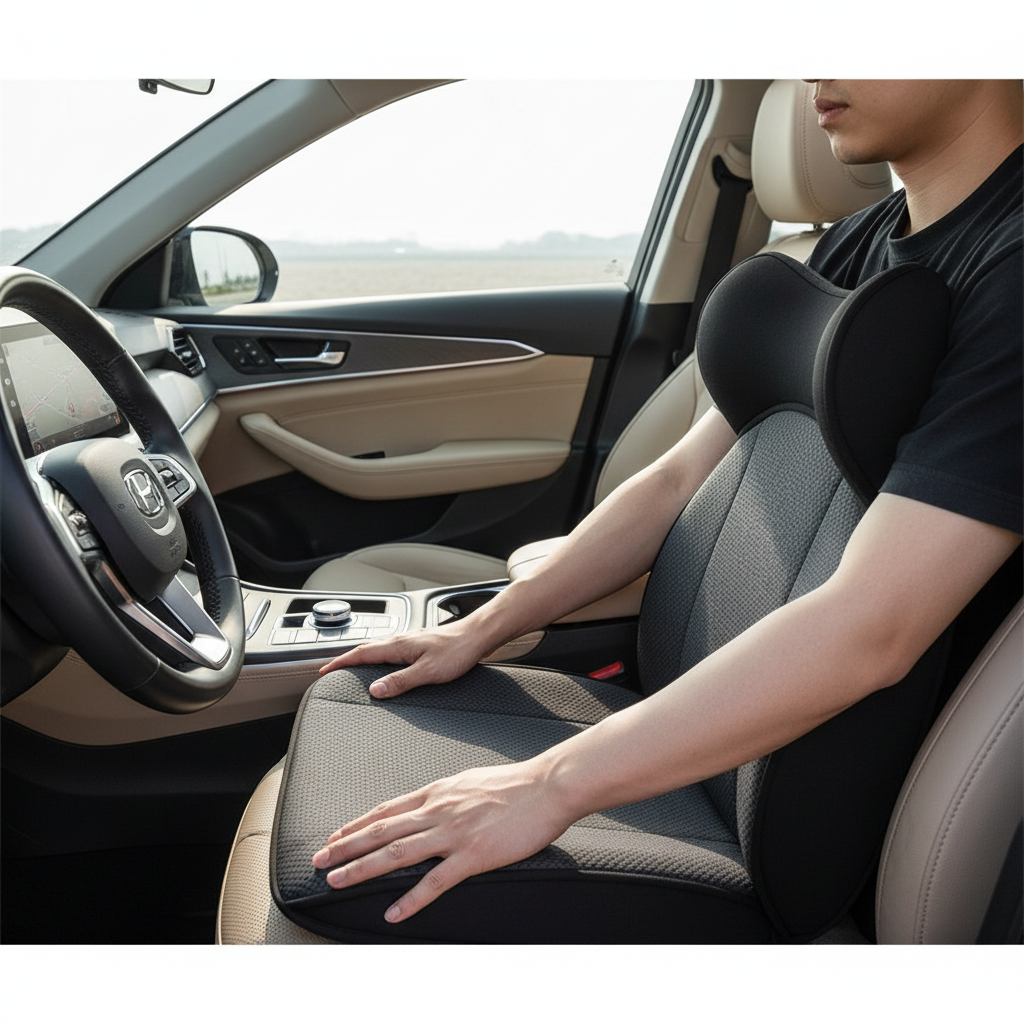
- Step 1: Install the cushion, then sit back fully so your hips touch the backrest.
- Step 2: Check pedal control. You want full travel without pointing your toes or lifting your heel unnaturally.
- Step 3: Adjust seatback angle and lumbar. Small changes matter more than you think once the cushion adds height.
- Step 4: Do a 15-minute local drive. If you feel pressure at the front edge or you keep sliding, swap styles (often wedge vs contour).
Key takeaway: comfort should feel stable. If you keep re-positioning every few minutes, that usually means the cushion is too soft, too thick, or shaped wrong for your seat.
Practical buying shortlist: what “best” looks like for common scenarios
Instead of naming a single winner, here are common long-drive scenarios and the cushion setup that tends to work.
- Daily commuter + occasional road trips: medium-thickness contoured memory foam, optional slim lumbar support.
- Tailbone sensitivity: firm foam with coccyx cutout, keep thickness moderate to avoid “floating.”
- Hot climate, long highway runs: gel-infused or ventilated cover, prioritize breathability over extra padding.
- Older seat with sagging cushion: higher-density foam to restore support, check that you still fit under the steering wheel comfortably.
- Lower back tightness: modest seat cushion plus a lumbar pillow, often better than stacking thick pads.
Common mistakes that make long-drive cushions feel worse
These are the repeat offenders I see in reviews and returns, and they’re avoidable.
- Buying the thickest cushion “for more comfort”: too much height can change your hip angle and create new pressure points.
- Ignoring lumbar support: many seats lack real lumbar shaping; a seat cushion alone can’t fix that.
- Placing the cushion too far forward: it can push you away from the backrest and remove back support.
- Using it with a worn seat cover that slips: sliding layers cause constant micro-corrections, which reads as fatigue.
- Expecting instant pain relief: discomfort can have multiple causes; if symptoms persist, it may be worth asking a clinician.
When it’s smart to talk to a professional
If you’re dealing with ongoing pain, a cushion can be a helpful tool, but it isn’t a diagnosis. According to CDC guidance on back pain, persistent or severe symptoms may warrant medical evaluation, especially if they come with warning signs.
- Numbness, tingling, or weakness that doesn’t fade after breaks
- Pain that worsens quickly, or wakes you up at night
- Recent injury, or pain paired with fever or unexplained weight loss
- Any driving position change that makes you feel less in control of the vehicle
If any of those sound familiar, consider checking in with a physical therapist or medical professional; they can often pinpoint whether you need lumbar support, hip mobility work, or a different seating setup entirely.
Conclusion: a simple way to pick your long-drive cushion
Finding the best car seat cushions for long drives is less about chasing the softest pad and more about matching support to your body and your seat. Start by identifying where discomfort shows up, choose a cushion style that targets it, then do a short test drive to confirm pedal control and posture feel natural.
If you want a clean next step, pick one seat cushion style (contoured or coccyx cutout) and one slim lumbar option, test them separately before you stack them, and keep what feels stable at the 30–60 minute mark.
Key points to remember
- Support beats plushness for long drives.
- Thickness can change safety and control, check pedal reach and steering wheel clearance.
- Many people get the best results with seat cushion + lumbar support, not one or the other.
FAQ
- What is the best cushion material for long drives?
High-density memory foam works for many drivers because it supports without feeling hard, but gel or breathable covers can feel better if heat is your main issue. - Are coccyx cutout cushions good for driving?
They can be, especially if tailbone pressure is your pain trigger. The catch is fit, if the cutout sits in the wrong spot, it may feel worse. - Can a seat cushion cause back pain?
Yes, in some cases. If it’s too thick or too soft, it can tilt your pelvis and reduce backrest support, which often shows up as low-back tightness later in the drive. - Should I use a lumbar pillow with a car seat cushion?
Often, yes. If your seat back feels flat or you notice slumping, a modest lumbar support can stabilize posture more than adding extra seat padding. - How thick should a car seat cushion be for long trips?
It depends on your height and seat, but “moderate” thickness tends to be easier to live with. If you feel perched or lose comfortable pedal control, it’s probably too thick. - Do car seat cushions make you sit too high?
They can. After installing, confirm you still have clear sight lines, comfortable steering wheel clearance, and full pedal travel without stretching or pointing toes. - How do I stop a car seat cushion from sliding?
Look for a non-slip base and use straps if your seat design allows it. If your seat cover is slick, adding friction (or changing the cover) can matter as much as the cushion.
If you’re trying to narrow down options quickly, a simple approach is to choose one cushion that matches your main discomfort (tailbone, heat, numbness, low back), then confirm it keeps your driving position stable on a short test loop before committing to a long trip.