
Best car glove box organizer for documents is the one that keeps your registration and insurance easy to grab in seconds, without turning your glove box into a paper avalanche.
If you have ever pulled into a gas station, gotten pulled over, or needed your insurance card after a minor fender bender, you already know the real problem is not “storage”, it is stress. You need the right paper, right now, with one hand, in bad lighting, and sometimes with someone waiting on you.
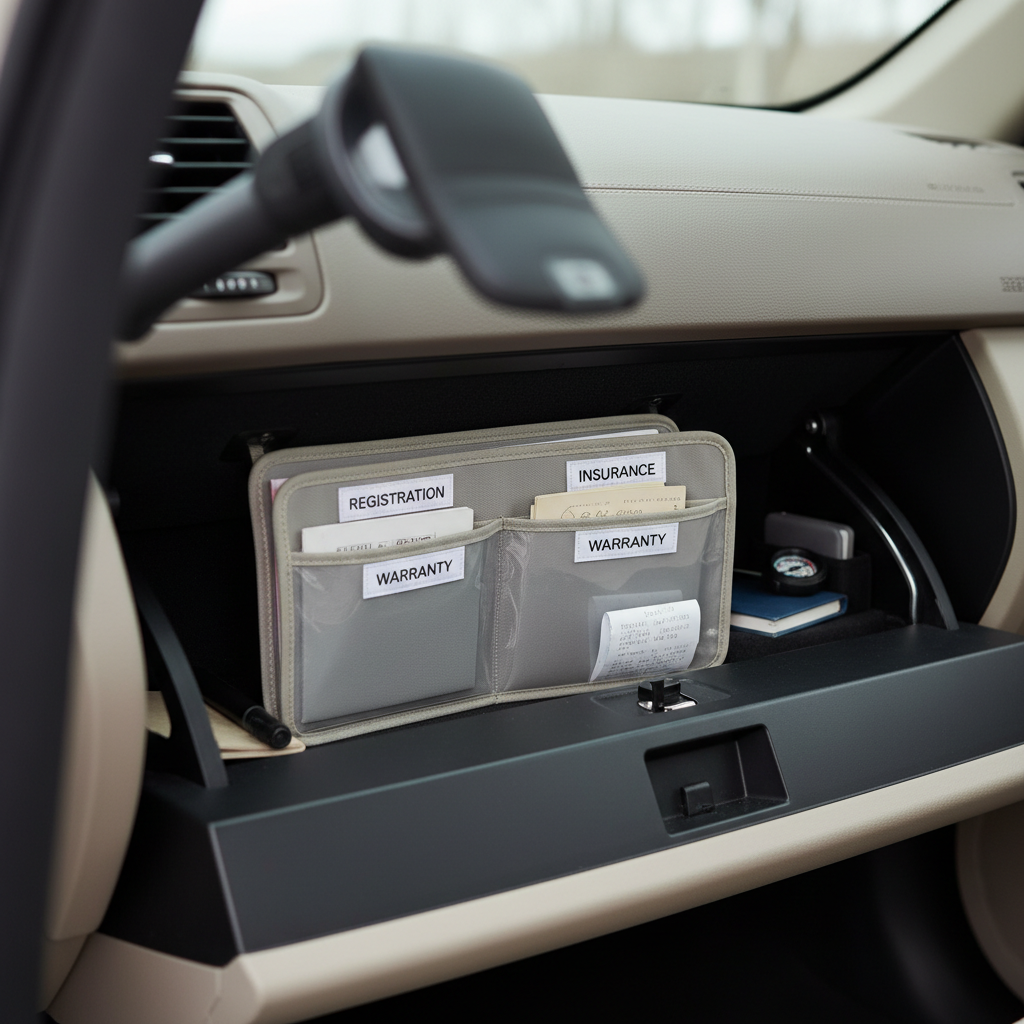
This guide stays practical. We will pin down what features matter for documents, what to skip, and how to set up a glove box system that still works after a few months of real driving.
Key takeaways:
- Quick access beats big capacity for document organizers.
- Moisture and heat protection matter more than most people expect.
- A simple labeling method prevents “mystery piles” from coming back.
What most glove boxes get wrong about document storage
Most glove boxes are designed as a catch-all, not a filing cabinet. That mismatch creates the usual pain points, and it is why people keep buying organizers and still feel messy.
- Too many loose sheets: manuals, service printouts, toll receipts, parking stubs, and old insurance cards all blend together.
- No fixed orientation: papers bend, slide, and end up under random items like a flashlight or napkins.
- Heat and humidity: in many U.S. climates, glove boxes get warm, and paper plus plastic sleeves can warp or stick over time.
- “Out of sight” drift: you tidy it once, then every small document goes back in without a system.
According to the National Highway Traffic Safety Administration (NHTSA), driver distraction is a safety issue, and fumbling for documents while driving or at a stop can add to it. A document organizer is less about aesthetics and more about reducing time spent searching.
How to choose the best car glove box organizer for documents
You do not need fancy. You need predictable access and protection. Here is what tends to separate a “nice idea” from something you keep using.
1) Pocket layout that matches real documents
Look for pockets that fit common paper sizes you actually carry, usually folded letter-size sheets, insurance cards, and small booklets. A mix of 1–2 full-size sleeves plus 3–6 small slots is usually enough.
2) A rigid spine or semi-hard cover
A floppy pouch collapses and becomes a drawer-within-a-drawer. A semi-rigid organizer holds shape, making it easier to slide in and out and flip open quickly.
3) Closure that stays shut
Velcro can work, but it can also collect lint and wear. Zippers are secure but can be annoying one-handed. A snap or magnetic flap is convenient, though it varies by product quality. In most daily-use cases, a simple elastic band or snap hits the sweet spot.
4) Water resistance, not “waterproof marketing”
Condensation, a spilled drink, or wet hands can happen. Water-resistant fabric plus plastic sleeves usually covers the realistic risk. If you live in a very humid area or keep the organizer in a door pocket sometimes, consider a more sealed option.
5) Low-profile thickness
The best car glove box organizer for documents is often the thinnest one that still protects papers. If it is bulky, it will fight with everything else in the compartment and stop being convenient.
Quick self-check: which organizer style fits you?
If you pick based on your “paper personality”, you waste less time. Answer these fast and you will know what to buy.
- You only want essentials (registration, insurance, ID copies): choose a slim, card-and-doc wallet.
- You keep service records and warranty papers: choose a folder-style organizer with 2 full sleeves.
- You share a car with a spouse/teen: choose labeled sections or color-coded tabs.
- You drive for work (mileage, tolls, permits): choose a multi-pocket accordion, but keep it thin.
- You hate maintenance: choose fewer pockets, fewer decisions, less clutter creep.
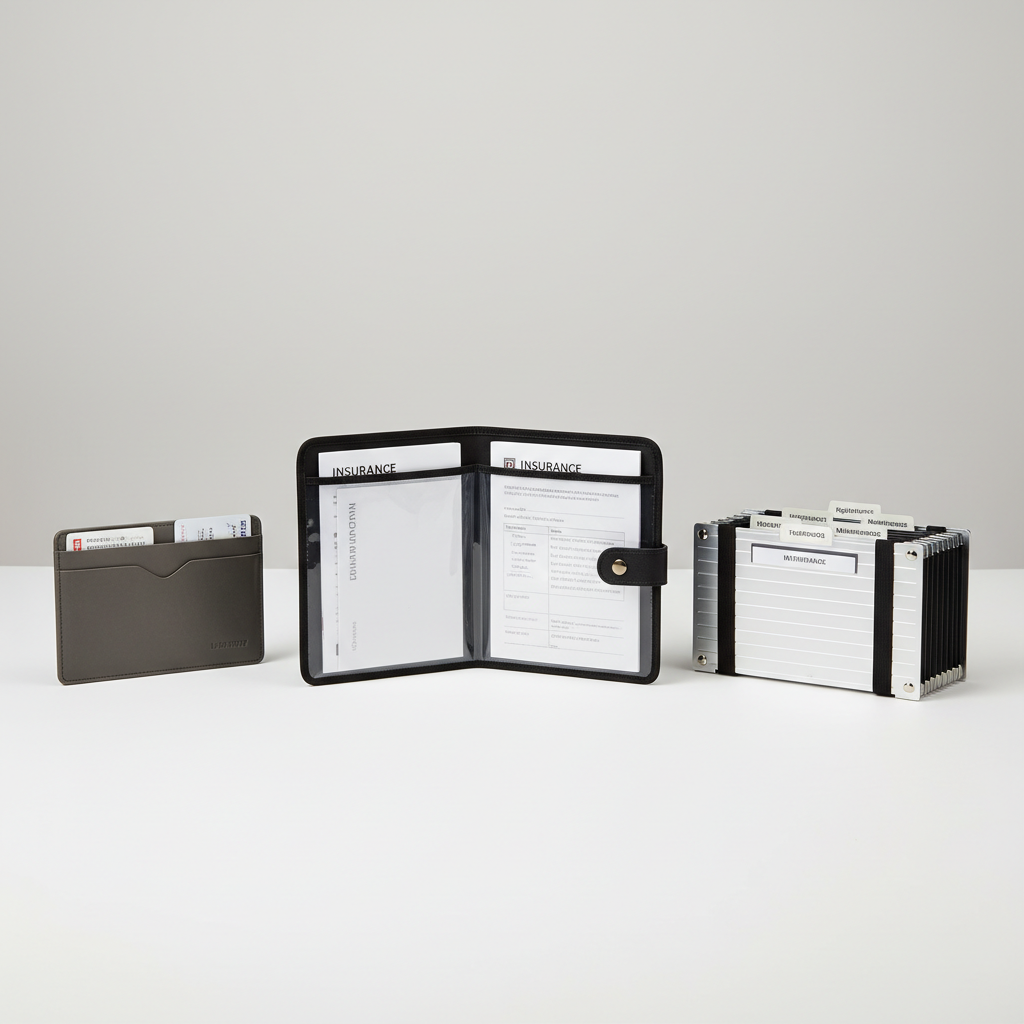
If you are unsure, default to a folder-style organizer. It handles the widest mix of documents without inviting you to store everything you have ever touched.
Feature comparison table (what matters most for documents)
Below is a quick way to evaluate options without getting lost in product photos.
| Feature | Why it matters | Good sign | Watch out for |
|---|---|---|---|
| Full-size sleeves | Stops folding and creasing | At least 1–2 sleeves | Only card slots, no paper space |
| Small card slots | Insurance cards, roadside info | 3–6 snug slots | Loose slots that dump cards |
| Rigid backing | Easier one-hand handling | Semi-hard cover or spine | Floppy pouch that collapses |
| Closure | Prevents papers sliding out | Snap/elastic/quality zipper | Weak Velcro, misaligned zipper |
| Water resistance | Protects papers from spills | Coated fabric + sleeves | “Waterproof” with open edges |
| Thickness | Still fits glove box easily | Low profile when filled | Accordion that bulges quickly |
Set it up once: a 10-minute document system that stays tidy
Buying an organizer helps, but the setup is what makes it feel “done”. This is the simple flow that tends to stick.
Step 1: pull everything out and sort into three piles
- Must-have now: registration, current insurance, roadside assistance card, emergency contacts.
- Nice-to-have: recent service records, warranty info, tire info.
- Trash/archive: expired cards, old quotes, random receipts.
Step 2: assign pockets by urgency, not by category
Front pocket should be the “traffic stop” set. Secondary pockets can hold service history. If you bury the essentials under maintenance paperwork, you will still fumble.
Step 3: label lightly
A tiny label maker strip or a simple marker note inside the sleeve works. Keep it minimal: “INS”, “REG”, “SERVICE”. Too many labels becomes noise.
Step 4: add one small rule for receipts
This is the part people skip. Choose one:
- Rule A: receipts go in one pocket only, dump monthly.
- Rule B: receipts never go in the organizer, keep a separate envelope.
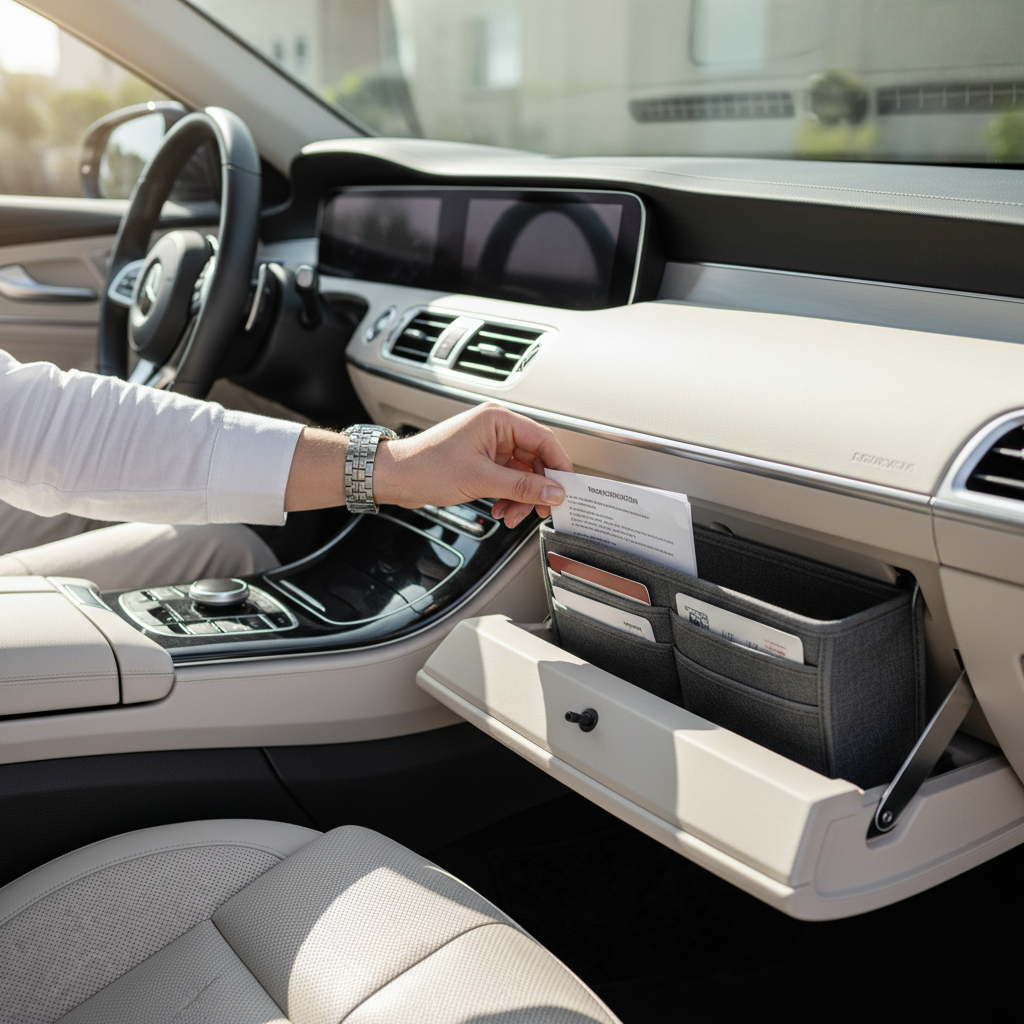
Small but useful: keep a pen in the glove box, but not inside the organizer if it can leave ink marks in heat.
Mistakes to avoid (these make organizers “not work”)
- Overstuffing: if it barely closes, you will stop using it, and papers will migrate outside again.
- Storing originals you cannot replace easily: in many cases, you may want copies rather than originals for certain documents, depending on your situation.
- Mixing emergency items with paperwork: a first aid kit, flashlight, or tire gauge belongs nearby, but not inside the document sleeves.
- Keeping expired proof of insurance: it creates hesitation when you are already stressed.
- Buying “too tactical”: heavy, bulky organizers look tough but often waste space and add friction.
If you are optimizing for “grab it fast”, the best car glove box organizer for documents is usually boring, flat, and easy to open.
When it’s worth getting extra help or checking local rules
Document requirements vary by state and situation, and if you are unsure what you must carry, it can be worth confirming with official sources. According to state DMV websites (for example, your state Department of Motor Vehicles), acceptable proof of insurance and registration presentation rules can differ.
If you are handling a fleet vehicle, leased car, or a work vehicle with permits, consider asking your employer or fleet manager what needs to be in the car, because “standard personal vehicle documents” may not cover it.
Conclusion: a simple organizer beats a complicated one
A glove box does not need to be perfect, it needs to be predictable. Pick an organizer with a slim profile, a couple of full-size sleeves, and a closure you do not fight with, then set it up around quick access.
If you want a clean next step, empty the glove box today, keep only the must-have stack, and commit to one receipt rule. That alone gets you most of the benefit without overthinking it.
FAQ
What should I keep in a car document organizer?
In most cases, keep registration and current proof of insurance in the easiest-to-reach spot, then add roadside assistance info and a short service record section if you actually use it.
Is a zipper better than Velcro for a glove box organizer?
Zippers usually stay secure and look tidy, but they can be slower one-handed. Velcro is quick but can wear out and snag. If you open it often, a snap or elastic closure can feel more natural.
Will papers get damaged in a hot car?
They can, especially if they are loose or pressed against items that shift. Plastic sleeves and a semi-rigid cover reduce bending and scuffing, and water-resistant materials help with humidity and spills.
How do I keep the organizer from getting thick over time?
Make a rule that only one pocket can hold receipts and “temporary papers”, then empty it on a schedule you will remember, often monthly or every oil change.
Should I keep my vehicle title in the glove box?
Many drivers avoid storing a title in the car because it can increase risk if the vehicle is stolen. If you are unsure what you should carry, checking guidance from your state DMV or a qualified professional is a safer move.
What size organizer fits most glove boxes?
Most glove boxes handle a low-profile folder around letter-size when folded documents are common, but depth varies a lot by vehicle. Measure the usable width and depth before buying if your glove box is tight.
Is an accordion file organizer a good idea for cars?
It can be, especially for work driving or lots of permits, but it is also the easiest style to overfill. If you go accordion, choose a thin one and limit it to documents you actively reference.
If you are currently digging for paperwork at the worst possible time, a dedicated best car glove box organizer for documents is a small upgrade that makes the whole car feel easier to live with, and if you prefer a more hands-off setup, look for an organizer with pre-labeled sections so you can sort once and move on.