
The best car wax spray for quick detail is the one that matches your paint, your wash habits, and how picky you are about streaks, not just the one with the loudest “shine” claim.
If you’ve ever tried a spray wax in a parking lot and ended up with smears, high spots, or dust glued to the surface, you already know why this matters. Quick detail products sit right on the line between “easy win” and “why did I do this,” and the difference is usually technique plus picking the right chemistry.
This guide breaks down what to look for, how to tell which product type fits your situation, and how to apply it fast without leaving a hazy mess. I’ll also flag common traps, like using the wrong towel or spraying too much on hot panels.
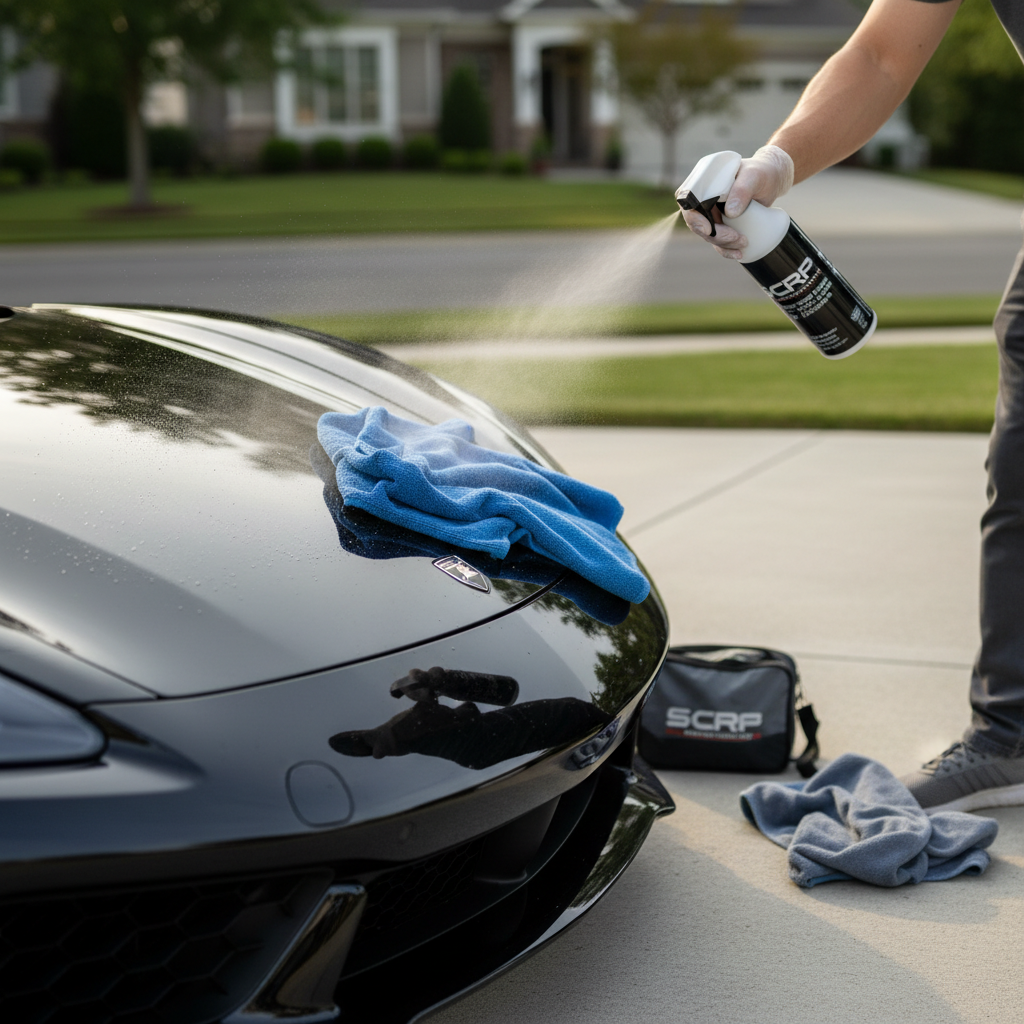
What “quick detail” spray wax is actually good for
Spray wax for quick detail is mainly about speed and appearance. It’s not the same job as a traditional paste wax, and it’s definitely not a correction step.
- Best use: after a wash, between washes, or after a rinseless wash to boost gloss and slickness.
- What it can do: add light protection, reduce water spotting a bit, make drying easier, and improve the “just detailed” look.
- What it won’t do: remove swirls, fix oxidation, or “lock in” months of durability by itself.
According to SGS (a global testing and inspection organization), coating and surface performance often depends on preparation and application conditions, so even a strong formula can underperform if the surface is contaminated or application is rushed.
Product types: spray wax vs spray sealant vs ceramic booster
A lot of “spray wax” labels are marketing shorthand. In practice, most quick-detail protectants fall into a few buckets, and each behaves differently on paint.
Carnauba-heavy spray wax
Usually gives warm gloss, especially on dark colors, and tends to look great right after application. Durability is often shorter, and it can be more sensitive to over-application.
Synthetic spray sealant
Often easier to use, more consistent across temperatures, and typically lasts longer than carnauba-style sprays. If you hate streaks, this category is frequently the safer pick.
SiO2 “ceramic” spray (booster/topper)
These usually focus on water behavior and durability. They can look extremely sharp, but they may be less forgiving if you spray too much or work in direct sun.
If your goal is the best car wax spray for quick detail after weekly washes, a forgiving synthetic or mild SiO2 spray often makes life simpler than a fussy high-gloss formula.
How to choose the best spray wax for your situation
Most people choose based on gloss, then get surprised by streaking or dust attraction. In real use, these criteria usually matter more.
- Paint color and finish: dark paint shows haze more, matte/satin finishes need products explicitly labeled safe for matte.
- Where you apply: driveway in sun vs shaded garage changes everything, heat makes many sprays grabby.
- Water quality: hard water can leave minerals, some sprays highlight leftover spotting.
- Your wash method: towel drying after a foam wash, or drying aid after rinseless, favors different lubricity.
- Streak tolerance: if you want “one pass and done,” pick the most forgiving formula, not the most hyped gloss.
Quick rule that saves time: if you’re often working in less-than-ideal conditions, prioritize ease of wipe-off and streak resistance over maximum shine claims.
Fast self-check: which kind of user are you?
Pick the closest description, then match the product type and technique to it.
- “I just washed, I want a pop of gloss in 10 minutes.” A forgiving spray sealant or carnauba-style spray, used on cool panels, light mist only.
- “I do rinseless washes and want drying help.” A spray with strong lubricity designed as a drying aid, applied to a wet panel or drying towel.
- “I care about beading and longevity.” A mild SiO2 ceramic spray used sparingly, with a second towel to level.
- “My car sits outside, I battle dust and pollen.” Avoid overly oily formulas, consider anti-static leaning sprays, wipe thoroughly to reduce residue.
- “I’m new and hate streaks.” Choose products known for easy buffing, and use the two-towel method every time.
If you want the best car wax spray for quick detail for beginners, the “forgiving + two towels” combo usually beats chasing a more temperamental finish.
Application that actually works (without the streaky regret)
This is where most quick detail jobs go sideways. The product matters, but the dose and towel matter more.
Step-by-step: clean, cool, minimal product
- Start with a clean surface: wash or rinseless wash first, don’t trap grit under your towel.
- Work on cool panels: shade helps, and so does letting panels cool after driving.
- Use less than you think: 1–2 sprays per panel is often enough, especially with SiO2 formulas.
- Spread, then buff: one towel to spread, a second dry towel to final buff and remove residue.
- Flip towels often: once a side loads up, it starts smearing instead of polishing.
Two common ways to use spray wax
- As a drying aid: mist onto a wet panel or onto your drying towel, then dry normally for added slickness.
- As a final topper: apply to a dry panel after washing, wipe evenly, then buff to a clean finish.
According to U.S. EPA, many chemicals can be irritating if mishandled, so use spray products in a ventilated area and follow the label, especially if you’re working inside a garage.
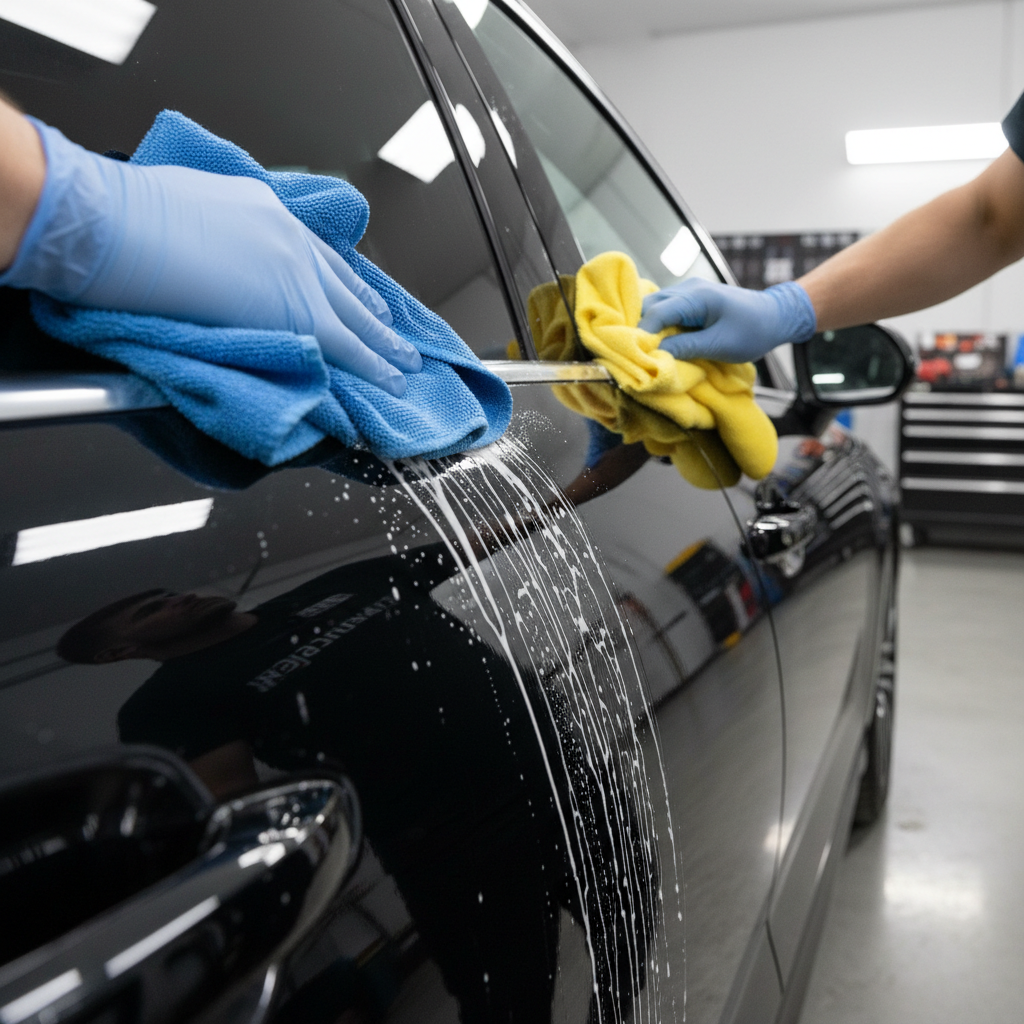
Quick comparison table: what to expect by formula
This is a practical cheat sheet, not a lab ranking. Individual products vary, but behavior usually clusters like this.
| Type | Look | Ease of use | Typical durability | Best for |
|---|---|---|---|---|
| Carnauba spray wax | Warm, deep gloss | Medium (can haze if overused) | Short to medium | Show-day shine, quick pop after wash |
| Synthetic spray sealant | Crisp, reflective | High (often streak-resistant) | Medium | Weekly maintenance, daily drivers |
| SiO2 ceramic spray | Sharp, glassy | Medium (needs careful leveling) | Medium to longer | Water behavior, topping existing protection |
Mistakes that make spray wax feel “bad”
When someone says spray wax “doesn’t work,” it’s often one of these issues, and most are fixable.
- Applying in direct sun: product flashes fast and becomes grabby, leaving high spots.
- Too much product: extra liquid doesn’t add extra protection, it just adds residue to buff off.
- Wrong microfiber: low-pile or saturated towels smear; use a plush towel for buffing.
- Dirty paint: road film and dust turn your wipe into mild abrasion, plus it kills gloss.
- Mixing products randomly: some layers don’t play well, especially if you stack oily sprays over fresh ceramic.
Key point: the best car wax spray for quick detail can still streak if the towel is overloaded or the panel is hot, so adjust the process before blaming the bottle.
When to step up from spray wax (or ask a pro)
Spray wax is a maintenance move. If your paint looks dull even after you apply it, you may be dealing with problems spray wax can’t solve.
- Swirls, oxidation, heavy water spots: you may need decontamination or polishing, which is easy to get wrong on thin clear coat, a detailer can help.
- Matte/satin paint or wraps: use products made for those surfaces, if unsure, ask the wrap installer or a pro detail shop.
- Respiratory sensitivity: consider low-odor products and ventilation, and if you have health concerns, it’s reasonable to consult a medical professional about exposure risks.
Key takeaways and a simple “buying” conclusion
If you’re shopping for the best car wax spray for quick detail, aim for a formula that matches your environment and patience level, then apply it like you’re trying to use as little as possible.
- For easiest results: choose a streak-resistant synthetic spray sealant and use the two-towel method.
- For maximum water behavior: pick a mild SiO2 spray, apply sparingly, buff thoroughly.
- For warm show gloss: carnauba-style spray can look excellent, but keep panels cool and product light.
Your best next step is simple: pick one category that fits your routine, then do one full application with clean towels and shade, you’ll know quickly whether it’s a keeper.
FAQ
What is the best car wax spray for quick detail after a normal hand wash?
In many cases, a synthetic spray sealant is the easiest match for a standard wash because it wipes off clean and doesn’t punish you for small mistakes, especially on darker paint.
Can I use spray wax as a drying aid?
Often yes, as long as the product label allows it and you keep the dose light. Spraying onto the drying towel instead of the panel can reduce overspray and streaking.
Why does my spray wax streak on black paint?
Black paint shows residue fast. The usual causes are too much product, a warm panel, or a towel that is saturated. Switching to the two-towel method fixes a lot of this.
How long should a quick detail spray wax last?
It varies by formula, climate, and wash style. Many quick detail sprays are more about weekly or biweekly maintenance than long-term protection, so reapplication is normal.
Is ceramic spray wax safe on clear coat?
Generally it’s designed for clear coat, but “safe” still depends on using it correctly. Apply on a clean surface, avoid hot panels, and level any high spots right away.
Can I layer spray wax over an existing ceramic coating?
Often you can, but it depends on the coating and the spray chemistry. Many people use SiO2 boosters made for coated cars; if you notice smearing, switch to a compatible topper.
Do I need to clay the car before using a spray wax?
Not every time. If the paint feels rough after washing, decontamination can help the finish look cleaner, but claying can add marring if done poorly, so weigh the risk.
Quick practical checklist before you start
- Panels cool? If not, wait or move into shade.
- Two clean microfiber towels ready? One to spread, one to buff.
- Less product plan? Start with 1 spray, add only if needed.
- Test on one panel first: confirm wipe-off behavior before doing the whole car.
If you’re trying to maintain a daily driver with minimal time, a consistent routine matters more than chasing the “shiniest” bottle; keep it clean, keep it light, keep your towels fresh.